Slavic castle site in Ketzin, Germany, from 9th-11th century.
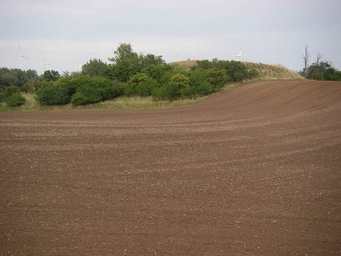
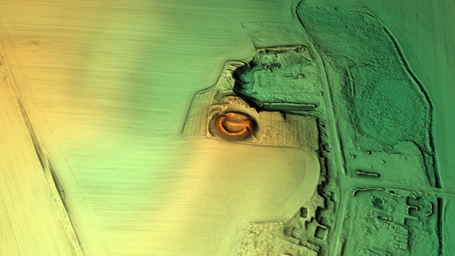
Burgwall Knoblauch is a deserted Slavic castle site located in Ketzin/Havel, Brandenburg, Germany. Originating between the 9th and 11th centuries, it features an oval ring wall on a natural elevation. The site was preserved despite the area's conversion into a natural gas storage facility in 1968/69.
Burgwall Knoblauch is a deserted castle site located in the former village of Knoblauch, now part of Ketzin/Havel in the Havelland district of Brandenburg, Germany. This site is a Slavic Niederungsburg, or lowland castle, characterized by an oval ring wall approximately 60 meters in diameter, situated on a natural elevation. The castle is believed to have been constructed between the 9th and 11th centuries, serving as the seat of a local noble who managed the surrounding area. Archaeological findings suggest that the site continued to be used after the region came under German control around 1150, transitioning into an early German Höhenburg, or hill castle. The first recorded mention of the location was in 1197 under the name Clebeloc. In 1968/69, the village of Knoblauch was abandoned to make way for a natural gas storage facility, but the Burgwall itself was preserved. Today, it stands as a significant archaeological site, offering insights into the region's Slavic and early German history. The site is also known by alternative names such as Schwedenwall and Schwedenschanze, reflecting its historical significance and the various cultural influences it has experienced over the centuries.