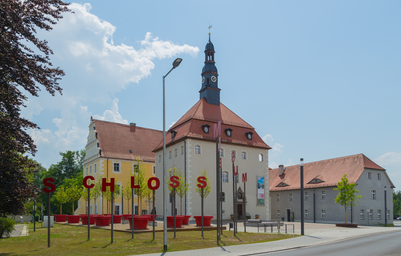
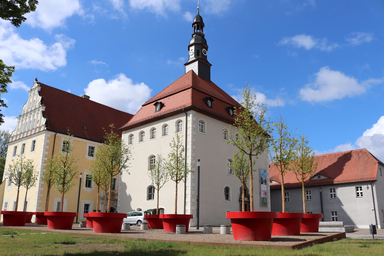
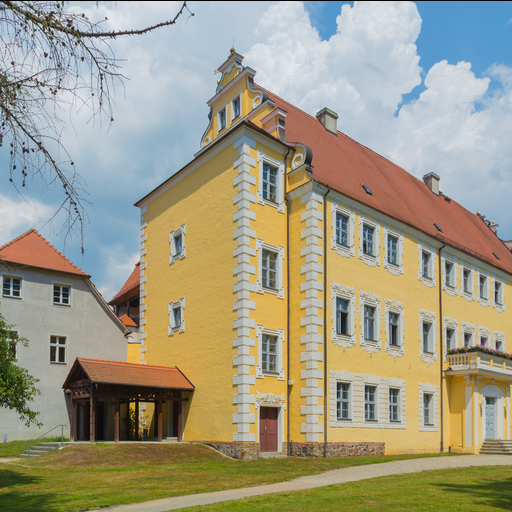
Medieval castle housing a museum in Lübben, Brandenburg, Germany.
Schloss Lübben is a medieval castle in Lübben, Brandenburg, Germany. Originally a 12th-century water castle, it has been altered since the 14th century. Now housing the Museum Schloss Lübben, it features a notable neogothic coat-of-arms hall from 1915 and serves as a cultural and historical site.
Schloss Lübben is a historic castle located in Lübben (Spreewald), Brandenburg, Germany. Originally built as a water castle in the 12th century, it occupies the site of a former Slavic ring fortification. The castle has undergone numerous modifications and expansions since the 14th century, reflecting its significance as an administrative and military center in the Niederlausitz region. The current structure was largely developed under the direction of Bohuslav Felix von Lobkowitz in the 16th century and later by Duke Christian I of Sachsen-Merseburg in the late 17th century. The castle suffered significant damage during the Thirty Years' War and again in World War II but was restored post-war. Today, Schloss Lübben houses the Museum Schloss Lübben, which focuses on regional history and cultural heritage. The castle is situated on the southern edge of Lübben’s old town, on an island known as Museum Island, with the Spreewald forest to the south. Notable features include the neogothic coat-of-arms hall from 1915, which is used for events and concerts. The castle is recognized as an architectural heritage monument in Brandenburg, highlighting its historical and cultural importance.