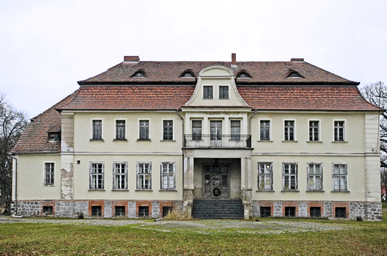
Baroque château rebuilt after 1921 fire in Brandenburg, Germany.
Schloss Rauschendorf is a château in Rauschendorf, Brandenburg, Germany. Built in 1723 for Graf Hermann von Wartensleben, it was renovated in the 19th century in Neorenaissance style. After a 1921 fire, it was rebuilt in 1923 as a Baroque-style château, now a designated architectural heritage monument.
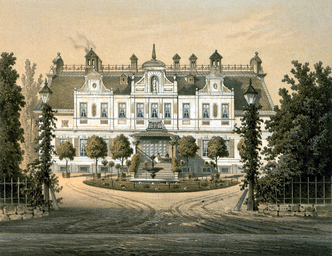
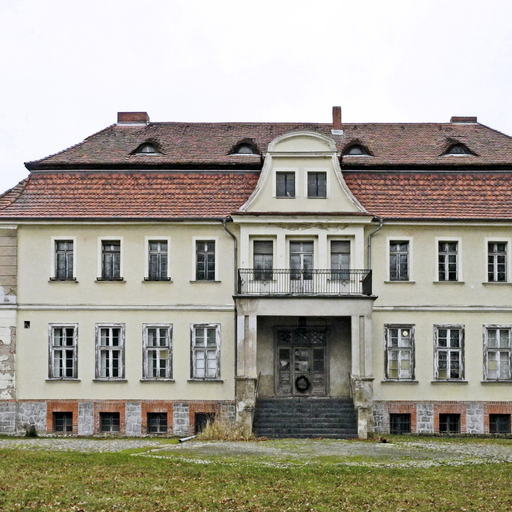
Schloss Rauschendorf is a château located in the village of Rauschendorf, within the Sonnenberg administrative area in Brandenburg, Germany. The site originated around 1220 as a knight's seat established by Gebhard von Arnstein. Over the centuries, it passed through various families, including the von der Groeben and Wartensleben families. The château was constructed in 1723 for Graf Hermann von Wartensleben. In the 19th century, it underwent significant renovations in the Neorenaissance style. A devastating fire in 1921 led to its reconstruction in 1923 as a two-story Baroque-style château for Ernst von Beyme. The current structure is recognized as an architectural heritage monument by the Brandenburg State Office for Monument Conservation and Archaeological State Museum. It features a mansard roof, a three-axial risalit, and a cross gable, constructed of solid masonry and stucco, measuring 11 bays wide and 9 bays deep. Throughout its history, the château has served various purposes, including a community center during the DDR era. Since 2007, it has been privately owned, with plans for future use including yoga and acting seminars. Schloss Rauschendorf remains an important historical landmark, reflecting its architectural and cultural heritage.