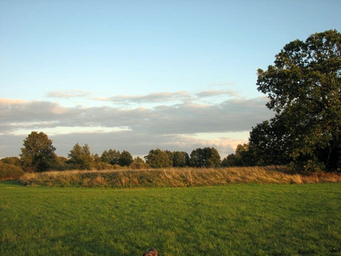
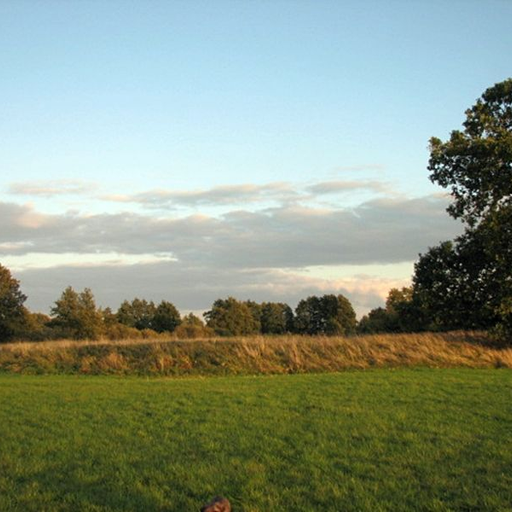
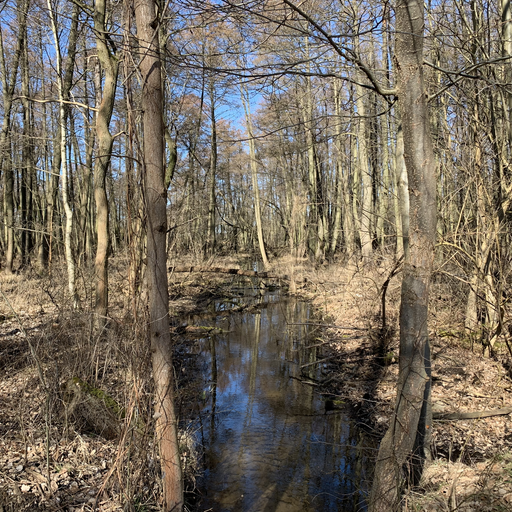
Slavic castle ruin near Körzin, Brandenburg, Germany, from 9th century.
Burgwall Körzin is a Slavic castle ruin located near Körzin, in the Michendorf area of Brandenburg, Germany. Dating from the 9th to 11th centuries, this lowland castle was strategically positioned near the Blankensee, offering natural protection. Archaeological finds include pottery shards and other artifacts, now housed in Berlin museums.
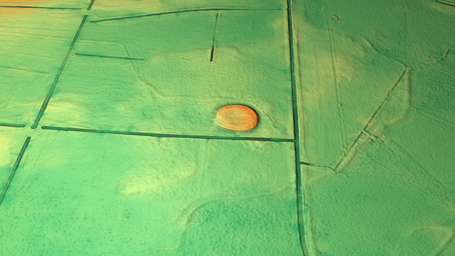
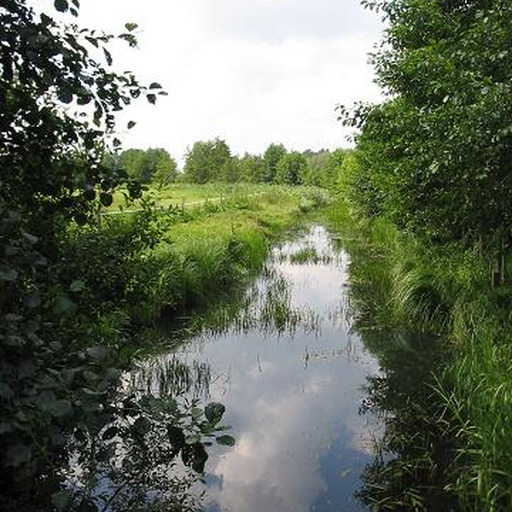
Burgwall Körzin is a historical site located southwest of Berlin, in the district of Brandenburg, Germany. It is situated in the area of Stücken, within the municipality of Michendorf, but is geographically closer to the village of Körzin, a part of the town of Beelitz. This site is a Slavic ringfort, known as a Niederungsburg, which dates back to the 9th to 11th centuries. The fortification is an oval structure measuring approximately 85 by 65 meters and is currently overgrown with bushes and trees. Historically, the water level of the nearby Blankensee was higher, making the surrounding meadows marshy and providing natural protection against sudden attacks. The fort was likely accessible only via a wooden bridge. In the late 19th century, the site was excavated by Hermann Busse, a Brandenburger amateur archaeologist. His findings included numerous pottery shards with wave patterns, bones, clay bricks, coal, snails, pieces of deer antler, and a whetstone. These artifacts were donated to the Märkisches Museum and the Ethnological Museum in Berlin. Today, Burgwall Körzin is recognized as an architectural heritage monument and remains an important archaeological site, offering insights into the region's Slavic history and early medieval fortifications.