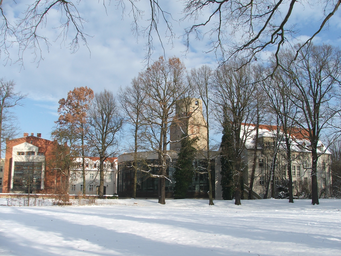
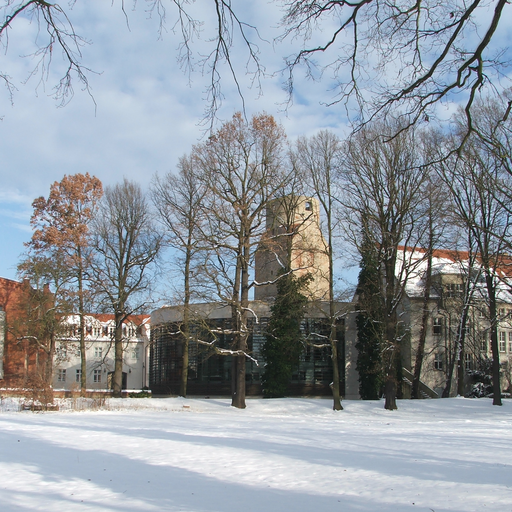
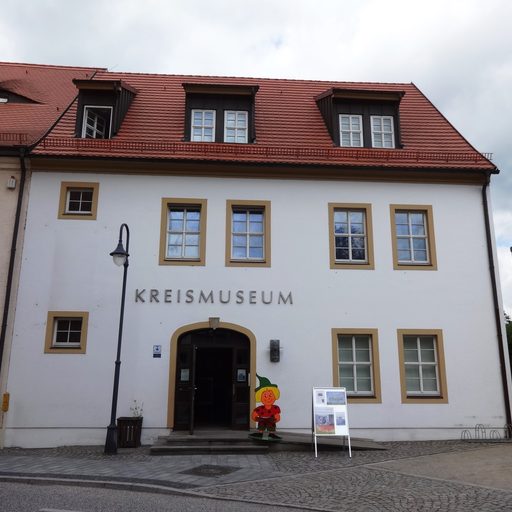
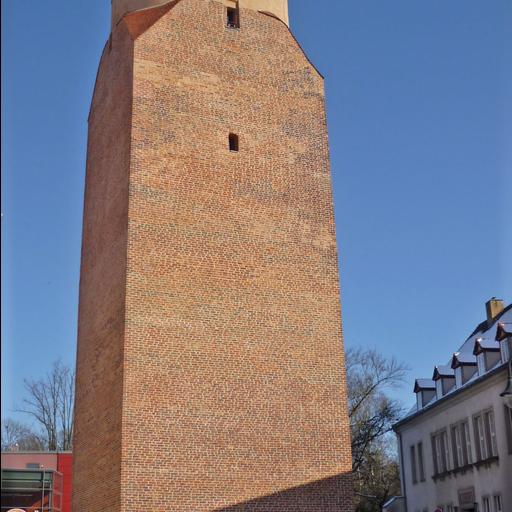
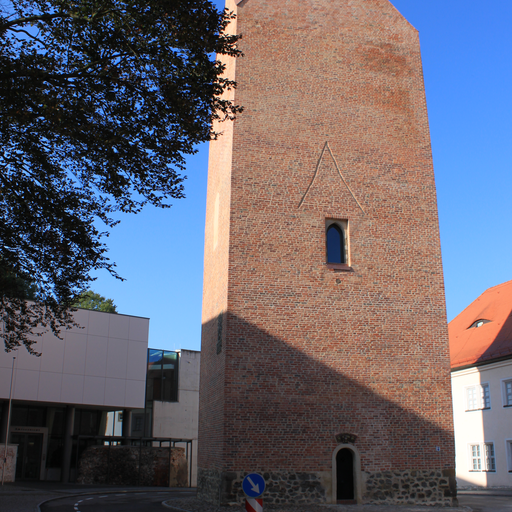
Burg Liebenwerda, also known as Schloss Liebenwerda, is a partially preserved 13th-century castle in Bad Liebenwerda, Germany. It features the notable Lubwartturm tower and served various historical roles, including as a Renaissance hunting lodge. The site now houses the Kreismuseum Bad Liebenwerda.
Burg Liebenwerda, also known as Schloss Liebenwerda, is a historic castle located in Bad Liebenwerda, Germany. Constructed around the early 13th century, it was part of the German eastward expansion and is situated along the Schwarze Elster river. The castle's first documented mention dates back to 1231. Over the centuries, it underwent several transformations, notably between 1568 and 1579 when it was converted into a Renaissance-style palace under Kurfürst August of Saxony. The castle served various purposes, including as a hunting lodge and a residence for nobility. In 1733, a fire severely damaged parts of the Hinterschloss, and although reconstruction efforts were made, the Lubwartturm remained in ruins. By 1815, the castle's significance declined as Liebenwerda became a Prussian district town. In 1907, a civic initiative saved the remaining structures from demolition, converting them into a museum. Today, the castle is partially preserved, with notable features like the 31.5-meter-high Lubwartturm and parts of the Hinterschloss still standing. The Kreismuseum Bad Liebenwerda is housed in the northern wing of the Hinterschloss. The site is open to visitors, offering scenic views and a glimpse into its rich historical past.