Medieval motte castle ruins in Löwenberger Land, Brandenburg, Germany.
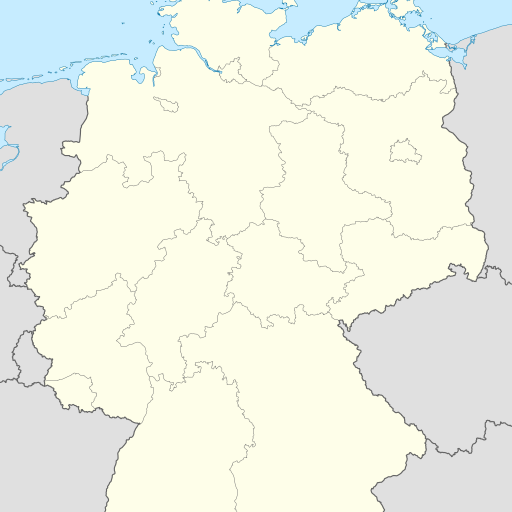
Schrabsdorf Castle is a medieval motte ruin located in Teschendorf, Löwenberger Land, Brandenburg, Germany. Built in the 13th century by the Ascanier as a border fortification, it features a square plateau and section ditches. The site is a cultural heritage monument and a registered archaeological site.
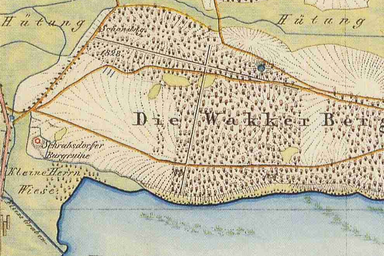
Schrabsdorf Castle is a medieval motte-and-bailey castle ruin located in the Löwenberger Land, a region in the northern part of Brandenburg, Germany. The castle, now a cultural heritage monument, was likely constructed in the 13th century by the Ascanian dynasty as a border fortification. It is situated in the village of Teschendorf, near the Dreetzsee, and was strategically positioned to control traffic from the Land Löwenberg to the south. The associated village of Schrabsdorf was first mentioned in 1270 but became deserted after 1414, possibly due to its distance from fertile lands, leading to the abandonment of the castle. The castle's remains include a square plateau, approximately 40 meters on each side, surrounded by ditches that created an island-like setting. A palisade likely fortified the northeastern side. Although the medieval structures were dismantled around 1840 for road construction, the site remains well-preserved and is registered as a protected archaeological monument in Brandenburg. The castle's ruins are now a prominent feature in the landscape, surrounded by meadows and fields, and are visible in digital terrain models. Schrabsdorf Castle is an important historical site reflecting the region's medieval past and architectural heritage.