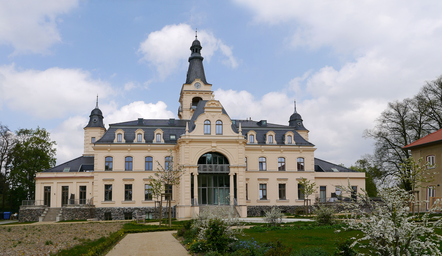
Manor house near Potsdam, renovated into apartments, heritage monument.
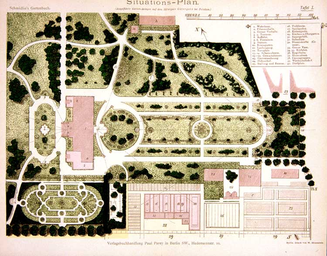
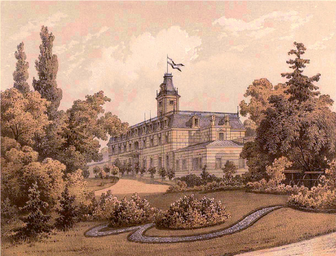
Schloss Güterfelde, originally known as Schloss Gütergotz until 1937, is a manor house located in Güterfelde near Potsdam, Brandenburg, Germany. Built between 1803 and 1804 by architect David Gilly, it exemplifies early classical architectural style with symmetrical structures and balanced proportions. The manor underwent significant renovations in the late 19th century under Albrecht von Roon, a notable owner who referred to it as his "Brandenburg Tusculum." The property changed hands multiple times, with owners including Gerson von Bleichröder, a prominent banker. In 2012-2014, Schloss Güterfelde and a nearby clay house from 1952 were converted into an apartment complex named Château de Roon. Both buildings have been listed as architectural heritage monuments in Brandenburg since 1986. The manor is a two-story structure with a mansard roof, originally built using brick and later covered with plaster. It is situated at Lindenallee 40-44 in Stahnsdorf, near Potsdam. The site holds significant cultural heritage value, recognized for its historical importance and architectural style. Today, it serves as a residential complex, maintaining its status as an important architectural and historical landmark in the region.