Historic fort near Küstrin, Germany, with cultural events and festivals.
Fort Gorgast is a historical fort in Gorgast, Germany, built between 1883 and 1889. Part of Küstrin's defensive ring, it controlled the Oder River's western bank. Now a cultural venue, it hosts the OBOA Festival, promoting inclusivity and featuring diverse music genres.
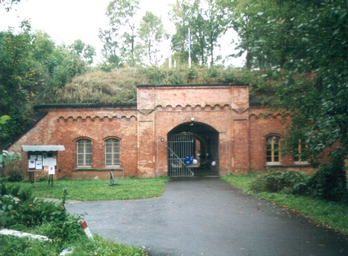
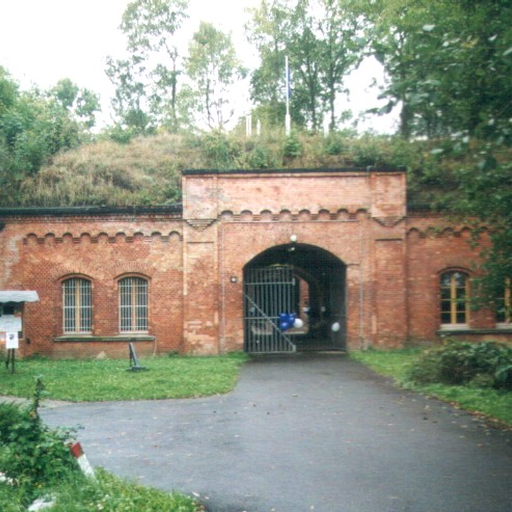
Fort Gorgast is a historical fort located in the village of Gorgast, near Küstrin-Kietz and Seelow along Bundesstraße 1 in Germany. Constructed between 1883 and 1889, it was part of a defensive ring around the former fortress of Küstrin, following the Franco-Prussian War. The fort was strategically designed to control the western bank of the Oder River and serve as a fallback position for troops. Built on farmland, it features one-story brick buildings and is surrounded by a 42-meter-wide and 3-meter-deep water moat. The fort could accommodate up to 310 soldiers, including infantrymen and artillery personnel. Key structures include a blockhouse with weapon positions, a gatehouse with barriers, a drawbridge, barracks, and a functional artesian well. Despite being considered obsolete upon completion due to advancements in military technology, Fort Gorgast remained intact through both World Wars. After the German reunification, it became the property of the Gorgast community, which, along with a support association, works to preserve and utilize the site. Since 1997, it has been a protected architectural heritage monument. The fort now hosts cultural events, notably the OBOA Festival, which promotes inclusivity and features diverse music genres, attracting visitors to explore its historical architecture.