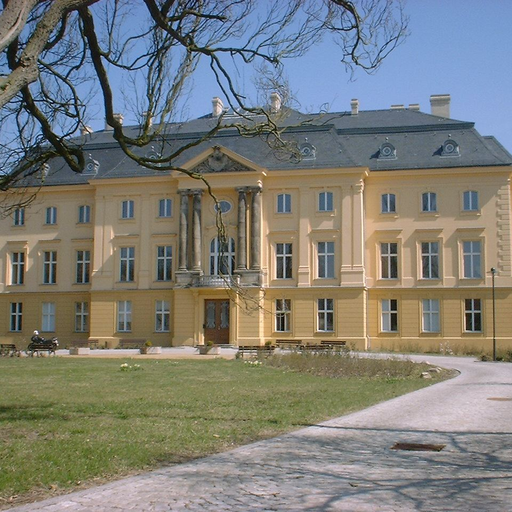
Historic manor house and estate park in Brandenburg, rebuilt and expanded.
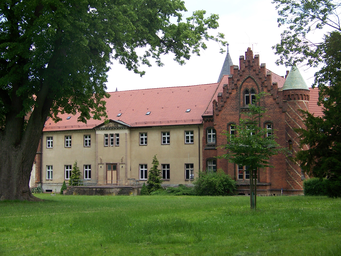
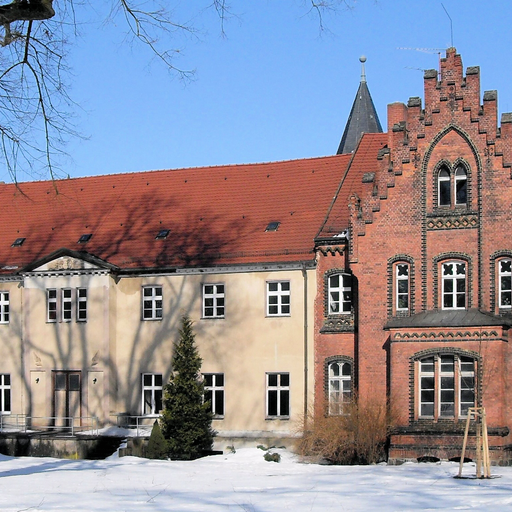
Schloss Jahnsfelde is a plastered, two-storey manor house with seven bays and a gabled roof in Germany. It dates from 1601–1700, with later rebuilding around 1831 and 1901 and an extension in 1871. Notable features include a Renaissance wooden door from Danzig and a cross-vaulted cellar.
Schloss Jahnsfelde is a manor house and estate park in Germany. The building is described as a plastered, two-storey manor house with seven bays and a gabled roof. Its dating is given as 1601/1700, indicating an early core from that period. The house was later altered around 1831 and again in 1901, and it was extended in 1871. Among its noted features is a wooden Renaissance door from Danzig, located in the former gentlemen’s room. Another recorded architectural element is a cellar with cross vaulting, dated to 1601/1700. The property is identified specifically as a manor house together with a manor park, showing that the historic residence formed part of a larger estate setting. The available information emphasizes the building’s architectural form and phases of development rather than narrative history. What can be confirmed from the source is that Schloss Jahnsfelde combines an older structure with later rebuilding and expansion, preserving details such as the Renaissance interior door and vaulted cellar. Overall, it is a historic German estate property consisting of a manor house and associated park, with documented construction phases from the 17th century and later modifications in the 19th and early 20th centuries.