Eighteenth-century siege of Gibraltar by Spain and France, ending unsuccessfully.
The Great Siege of Gibraltar (1779–1783) was an unsuccessful Spanish and French attempt to capture Gibraltar from the Kingdom of Great Britain during the American Revolutionary War. Blockaded by land and sea, the British garrison suffered shortages and disease but held out, and the siege ended with a British victory.
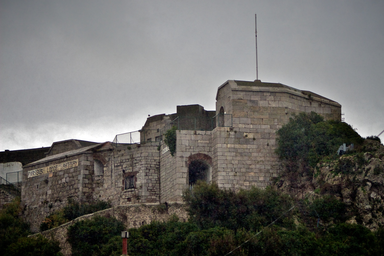
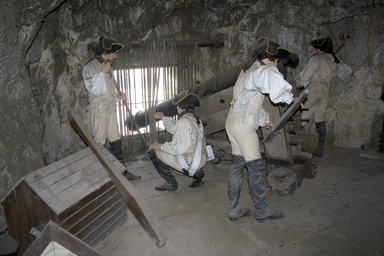
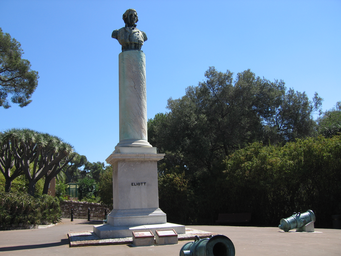
The Great Siege of Gibraltar was a major siege of the British-held fortress and town of Gibraltar between 24 June 1779 and 7 February 1783. It formed part of the American Revolutionary War and the Anglo-Spanish conflict of 1779–1783. Spain and France jointly sought to wrest Gibraltar from the Kingdom of Great Britain, using a prolonged land and naval blockade, bombardments and large besieging armies. At the start of the siege there were about 5,382–5,400 British soldiers in the garrison. Spanish and French fleets blockaded Gibraltar by sea, while a large army faced it on the mainland. Food and fuel quickly became scarce, and scurvy spread among the defenders. British convoys, including one under Admiral George Rodney, forced their way through the blockade and brought supplies and reinforcements, temporarily easing the crisis. The governor of Gibraltar, General George Augustus Eliott, strengthened the defenses and at one point launched a surprise night sortie through Landport Gate, disabling enemy guns and blowing up three batteries with very few British casualties. During the siege, tunnels were dug in the Rock of Gibraltar, later known as the Great Siege Tunnels. After years of blockade, bombardment and failed assaults, the besieging forces finally abandoned the effort in 1783, leaving Gibraltar in British hands.