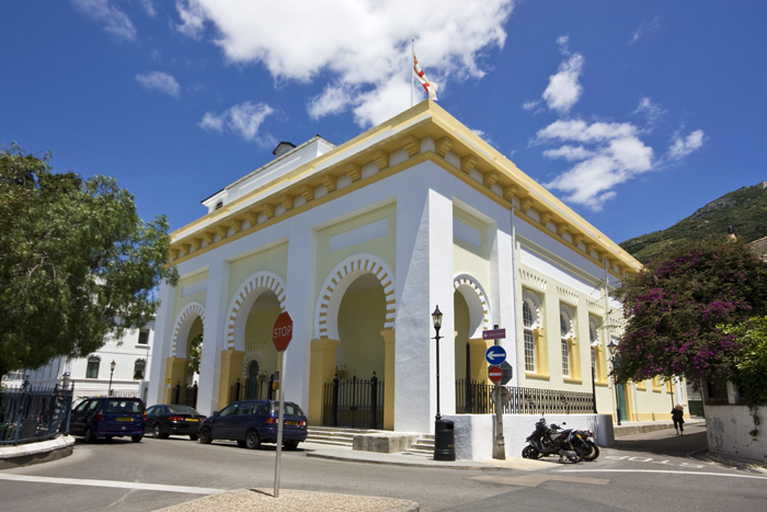
Anglican neo-Moorish cathedral with horseshoe arches on Gibraltar’s Cathedral Square.
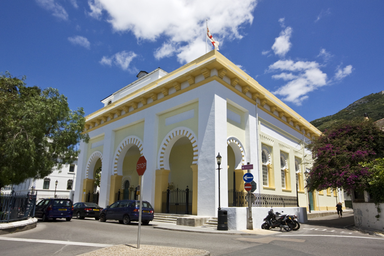
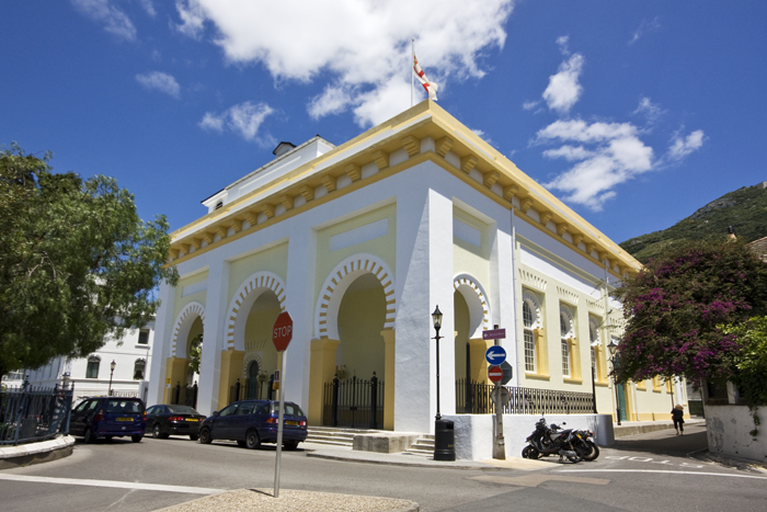
The Cathedral of the Holy Trinity is an Anglican cathedral on Cathedral Square in Gibraltar, seat of the Diocese of Gibraltar in Europe. Built from 1825 to 1832 for Gibraltar’s civilian Anglicans, it features neo-Moorish architecture with distinctive horseshoe arches reflecting Gibraltar’s Moorish and wider Al-Andalus heritage.
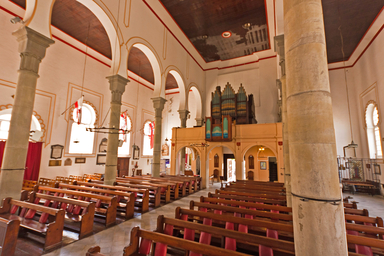
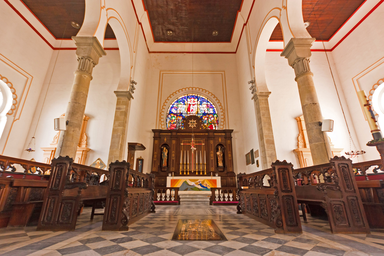
The Cathedral of the Holy Trinity is an active Anglican cathedral on Cathedral Square in Gibraltar and the seat of the Diocese of Gibraltar in Europe, also known as Gibraltar in Europe or the Diocese in Europe. It serves the Anglican community and is sometimes simply called the Gibraltar Cathedral, though this can cause confusion with the Roman Catholic Cathedral of St. Mary the Crowned. Construction of the church began in 1825 and was completed in 1832, originally to serve Gibraltar’s civilian Anglican population, as the King’s Chapel was mainly used by the military. The project was initiated by Governor John Pitt, Earl of Chatham, who persuaded the British government to sell an abandoned building to fund the work; Colonel Robert Pilkington of the Royal Engineers oversaw construction. During a yellow fever epidemic, the partially built church was temporarily used as a hospital. The church was dedicated in 1838 in the presence of Queen Adelaide and became a cathedral in 1842 when the Diocese of Gibraltar was created. Architecturally, the building is neo-Moorish, strongly characterized by horseshoe arches inspired by Moorish architecture and Gibraltar’s Moorish past within Al-Andalus. Interior features include a southern aisle chapel dedicated to Saint George and a stone from wartime-damaged Coventry Cathedral set behind the font.