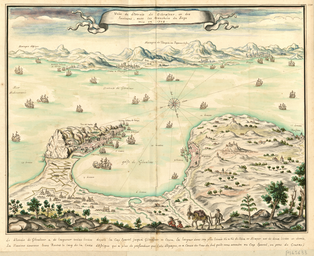
Franco-Spanish siege of Gibraltar during the War of Spanish Succession.
The 1704–1705 Siege of Gibraltar was a Franco‑Spanish attempt to retake Gibraltar shortly after its capture by an Anglo‑Dutch force for Archduke Charles during the War of the Spanish Succession. Spanish and French troops under the marquis de Villadarias and the count de Tessé failed against the defending austricist garrison.
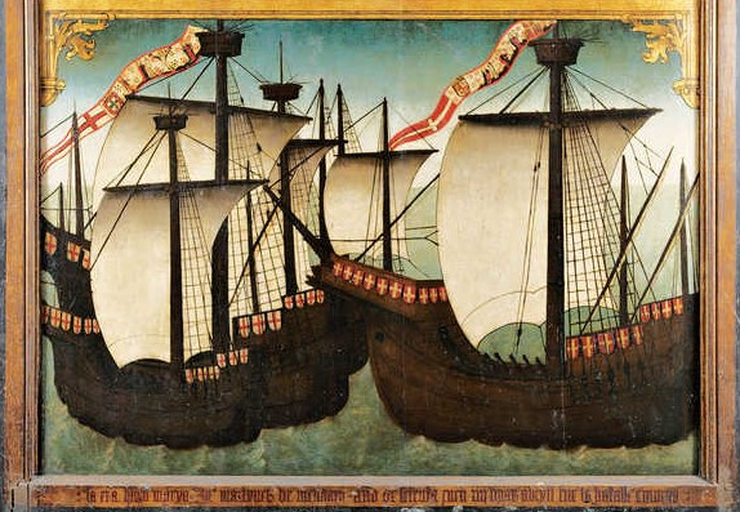
The 1704–1705 Siege of Gibraltar was a Franco‑Spanish operation during the War of the Spanish Succession, undertaken soon after the Anglo‑Dutch capture of Gibraltar in the name of Archduke Charles. King Philip V ordered Francisco del Castillo y Fajardo, marquis de Villadarias and captain general of Andalucía, to besiege the city and recover it. Around 9,000 Spanish troops from the Andalusian and Extremaduran armies, reinforced by about 3,000 French soldiers, assembled in the Campo de Gibraltar. On the defending side, the prince of Hesse‑Darmstadt governed Gibraltar with a force of about 3,000 men, including soldiers who had deserted from the Spanish army, and strengthened the northern fortifications and obstacles on the isthmus. Spanish engineers built batteries and trenches on the isthmus, while the defenders used a galleot anchored at the north mole to fire on the besiegers. Naval support proved decisive: John Leake’s British squadron arrived from near Lisbon, burned or captured several French ships in the bay of Algeciras, and secured sea control and resupply for Gibraltar. Spanish assaults, including an attempted surprise attack on the Rock guided by the local shepherd Simón Susarte and later breaches in the northern walls, were repelled. The siege ultimately ended in failure for the Bourbon forces.