Eighteenth-century earthwork defensive lines protecting Gibraltar’s vulnerable southern approach.
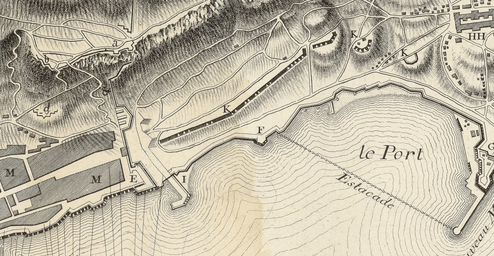
The Prince of Wales Lines were earthwork fortifications in Gibraltar, ordered in 1756 by Governor Lord Tyrawley. Built between the South Front glacis and the New Mole, they formed retrenched lines for guns and muskets defending ground toward Rosia Bay, then considered the weakest part of Gibraltar’s fortifications.
The Prince of Wales Lines were a set of earthwork fortifications constructed in Gibraltar in 1756 on the orders of Lord Tyrawley during his term as Governor of Gibraltar. They consisted of a series of retrenchments for guns and muskets between the glacis of the South Front and the New Mole, south of Gibraltar’s urban area, covering ground between the South Front and Rosia Bay that was viewed as the weakest section of the fortifications. This same area had previously seen British Royal Marines land during the capture of Gibraltar. Tyrawley placed Captain Charles Rainsford, an aide with an amateur interest in military architecture, in charge. The project quickly became controversial, pitting Tyrawley and Rainsford against Colonel William Skinner of the Royal Engineers. Tyrawley insisted on earthworks, arguing they were quicker, cheaper, and avoided dangerous splinters. Skinner preferred solid stone revetments and doubted that earthworks would withstand Gibraltar’s hot summers and heavy winter rains or function effectively as a retrenchment. Despite objections, Tyrawley proceeded. Old barrels supported the structures, and rubble formed the glacis. The lines, laid out en cremaillère and broken by embrasures for paired guns, were intended to be manned by defenders who would use trenches and 8‑inch howitzers firing canister or grape shot against landing forces.