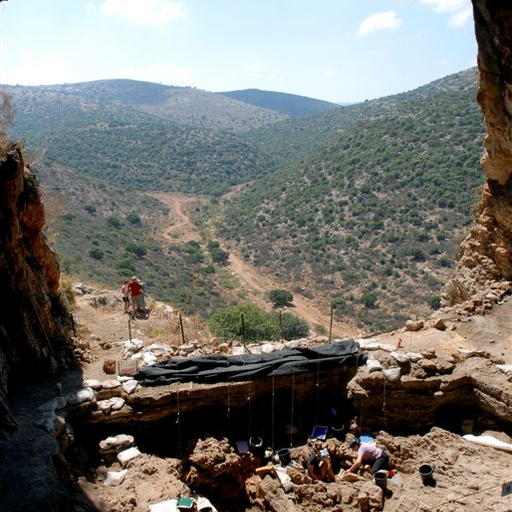
Amud cave

Israel_caves ISR ADM0·103 ADM1·1898 ADM2·24176
EN RU he
Description

Historic cave with Neanderthal remains in Israel's Northern District.

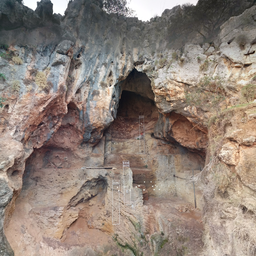
Amud cave in northern Israel contains Middle Paleolithic artifacts and Neanderthal remains. Notable finds include the nearly complete skeleton of "Amud 1" from around 50,000 years ago and infant "Amud 7." The site offers insights into Neanderthal life and burial practices.

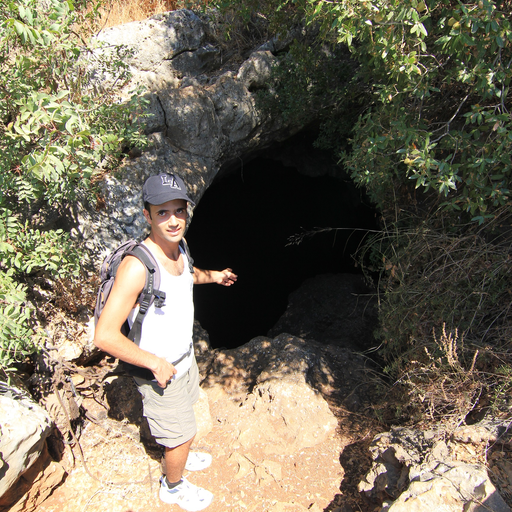
Amud Cave is a significant archaeological site in northern Israel's Galilee region. Discovered in 1961 by Hisashi Suzuki, the cave yielded crucial Neanderthal remains and artifacts from the Middle Paleolithic era. Notable finds include "Amud 1," an almost complete adult male skeleton with a large brain capacity of 1740 cm³, dating back approximately 50,000 to 60,000 years ago. This specimen is one of the largest Neanderthal skulls ever found and provides insights into Neanderthal anatomy and behavior. Additional discoveries include "Amud 7," a partial infant skeleton from around the same period, further enriching our understanding of Neanderthal life in this area. The cave's stratigraphy reveals multiple occupation layers, with evidence of stone tools, hearths, and animal bones indicating long-term habitation by Neanderthals. Thermoluminescence dating confirms these remains date to between 50,000 and 70,000 years ago. Excavations also uncovered diverse faunal assemblages, including cut-marked bones that suggest sophisticated butchery practices. Amud Cave's significance lies in its well-preserved Neanderthal fossils and artifacts, offering a unique window into the lives of these ancient hominins during their final millennia before extinction. The site continues to attract researchers interested in understanding Neanderthal culture, diet, and social organization.
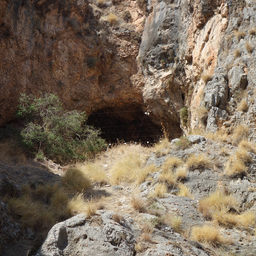
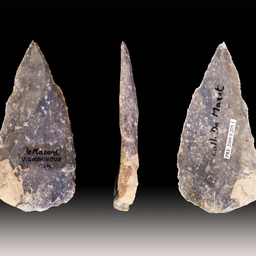
Photos (3)
Ratings
Fame: 62 Wow: 45 Ease of Access: 20 Physical Demand: 15 Safety: 48 Tourist Density: 25
Fame 62
Amud Cave is a significant archaeological site with extensive documentation across multiple languages, including detailed Wikipedia pages and numerous scholarly references. Its importance lies in the discovery of Neanderthal remains, making it notable within academic circles but less known to the general public.
Wow 45
The cave's primary appeal comes from its historical and scientific significance rather than natural beauty or dramatic scenery. It is a site of great interest for researchers studying early human history but does not offer an immediate wow factor for casual visitors.
Ease of Access 20
Located within walking distance of the Nahal Amud gorge in Upper Galilee, Israel. The area has standard tourist infrastructure and paved roads leading to it, making access relatively straightforward despite its remote location.
Physical Demand 15
Accessing the cave involves minimal physical effort; visitors can walk to the site from nearby areas with no significant elevation gain or technical challenges required.
Safety 48
The safety level is moderate, reflecting the overall country risk score for Israel. While there are no specific natural hazards mentioned, political tensions in some regions of Israel may slightly elevate local risks.
Tourist Density 25
As a specialized archaeological site, Amud Cave attracts mainly researchers and enthusiasts rather than mass tourism. Visitors are likely to be few and mostly academic or interested individuals.
Location & Coordinates
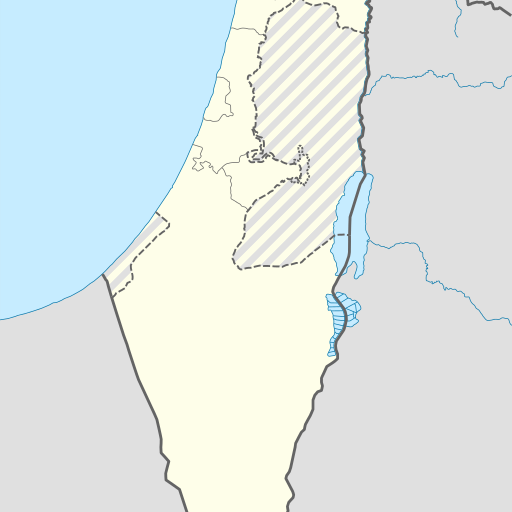
32.945882, 35.296331
Map
🗺 Show on Interactive Map
External Links
Nearby Points (8)