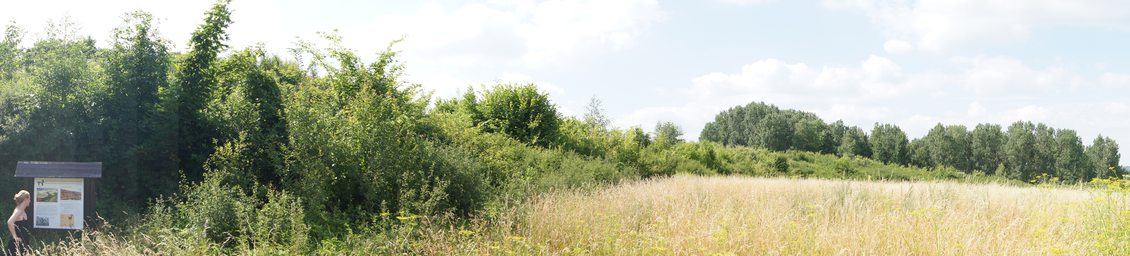
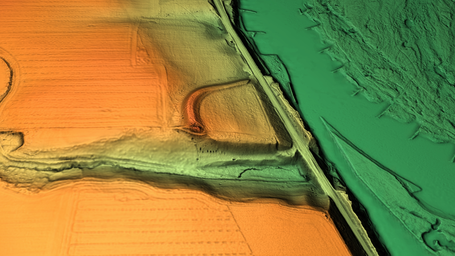
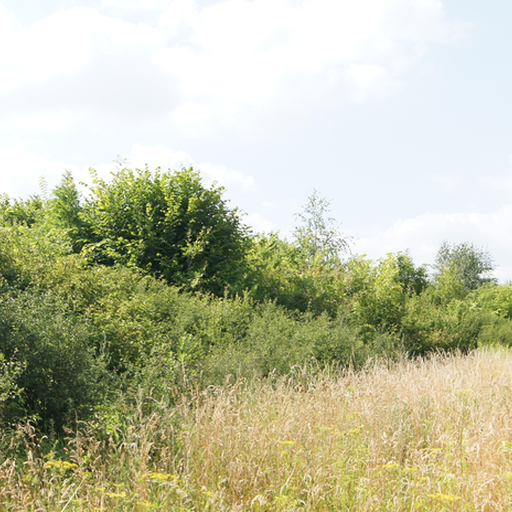
Archaeological castle earthwork and former Slavic fortification at Lossow, Germany.
Burgwall Lossow is an archaeological castle site and former Slavic ringfort in Lossow, south of Frankfurt (Oder) in Brandenburg, Germany. The lowland fortification occupies about 4.8 hectares near the Oder. Its origins likely date to the 10th century BC, and it is listed as a cultural heritage monument.
Burgwall Lossow is a castle site and archaeological monument in Lossow, now a district of Frankfurt (Oder) in Brandenburg, Germany. It is listed as a cultural heritage monument and as an archaeological monument in Brandenburg. The site lies about seven kilometers south of Frankfurt (Oder), west of the Oder River. The complex is a lowland fortification that survives as a Burgstall, the remains of a former stronghold. According to the Wikipedia text, its history began as a fortified settlement in the 12th century BC, and construction of the rampart probably started in the 10th century BC. In the early Iron Age, around 800 to 600 BC, the area was settled by the Göritzer group of the Lusatian culture. The site was abandoned in the 6th century BC, then rebuilt by Slavs in the 8th century and destroyed by fire in the 10th century. Today the rampart encloses an area of 4.8 hectares. The inner area is protected in the north and west by a six-meter-high wood-and-earth wall, in the east by the natural slope called the Steile Wand, and in the south by a natural valley. Archaeological investigations began in the late 19th century and continued through 2009, uncovering casting molds, animal and plant remains, vessels, jewelry, weapons, and human and animal skeletons.