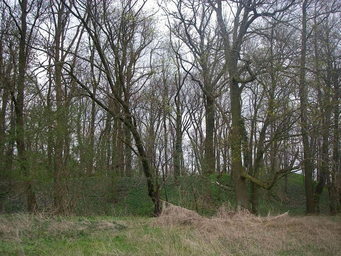
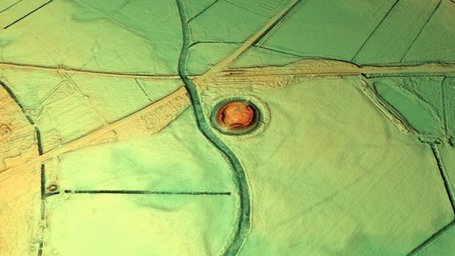
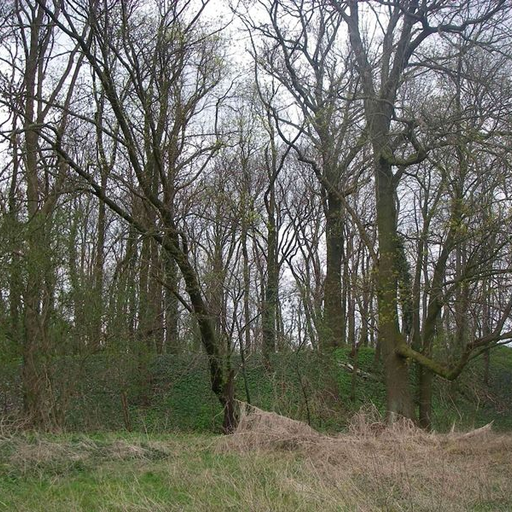
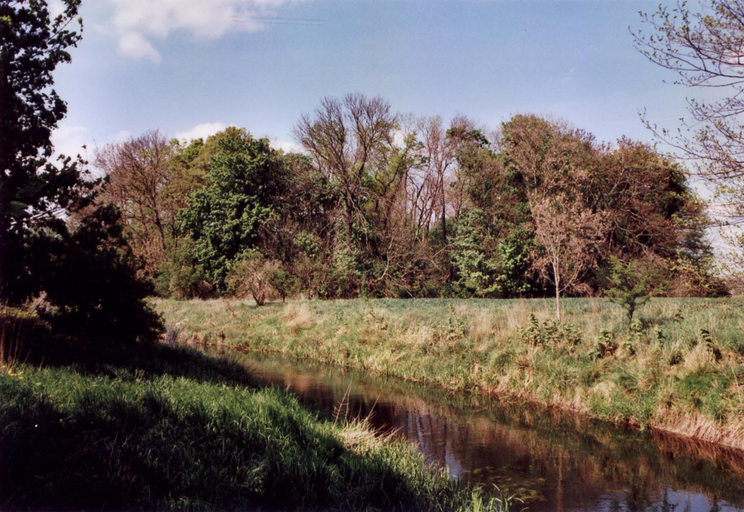
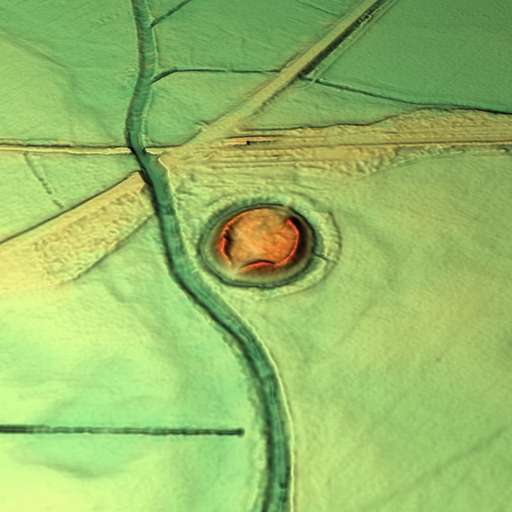
Slavic hillfort ruins from 7th-9th century in Temnitztal, Germany.
Burgwall Wildberg in Temnitztal, Germany, is a cultural heritage monument. It is the site of a Slavic lowland castle from the 7th to 9th centuries. Located northeast of Wildberg, the oval-shaped site is now forested and measures over 100 meters in diameter.
Burgwall Wildberg, located in the district of Ostprignitz-Ruppin within the municipality of Temnitztal, Germany, is the site of a Slavic lowland castle, known as a "Burgstall." This cultural heritage monument is situated northeast of the village of Wildberg, near the Temnitz river. The site features an oval-shaped fortification with a diameter of over 100 meters and is currently covered by forest. Archaeological findings suggest that the Burgwall dates back to the early Slavic period, specifically between the 7th and 9th centuries. The castle served as a defensive structure during its time, indicative of the strategic importance of the location in the early medieval period. Today, the site is recognized as a significant archaeological and cultural landmark, reflecting the historical presence and architectural practices of the Slavic people in the region. The Burgwall is part of the broader category of Slavic fortifications found throughout Brandenburg, offering insights into the early settlement patterns and defensive strategies of the Slavic tribes. As a protected archaeological site, it continues to be a subject of study and interest for historians and archaeologists aiming to understand the region's early history and cultural development.