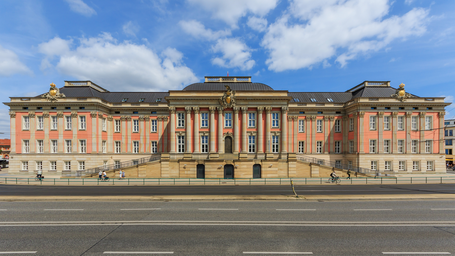
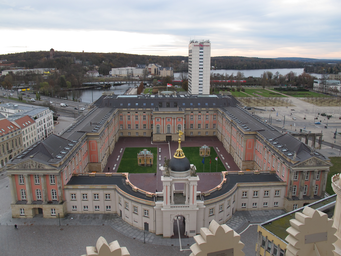
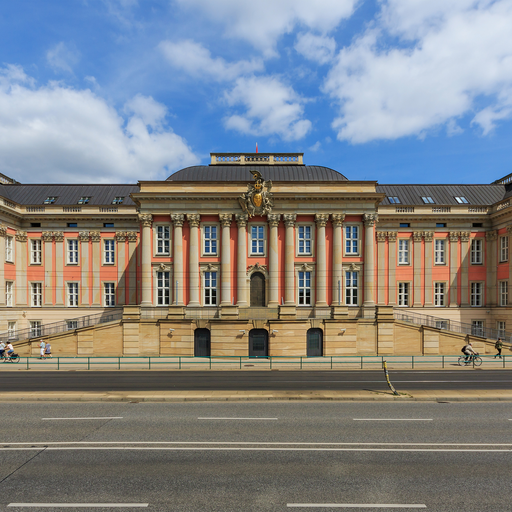
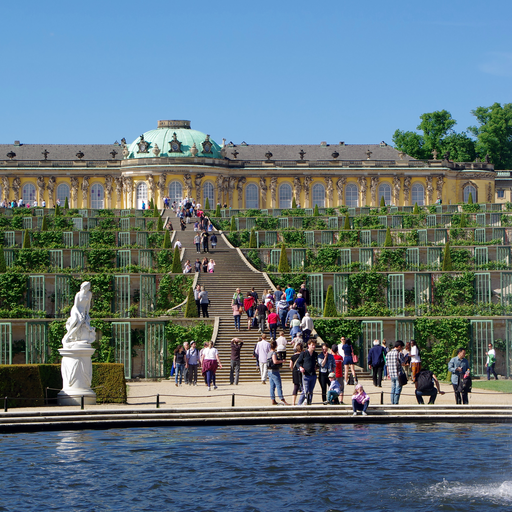
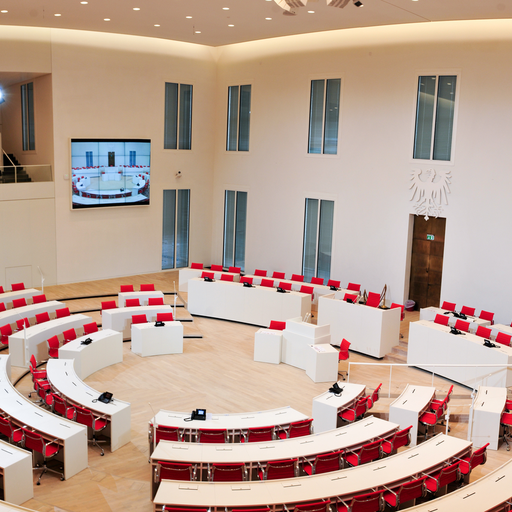
Reconstructed baroque palace in Potsdam, now Brandenburg parliament seat.
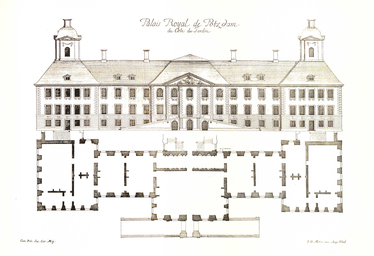
The City Palace, also known as Potsdamer Stadtschloss, is a historic building located in Potsdam, Germany. Originally constructed between 1662 and 1669 in Baroque style, it was later expanded in Rococo style from 1744 to 1752 under the direction of architect Georg Wenzeslaus von Knobelsdorff for Frederick the Great. The palace served as a winter residence for the electors of Brandenburg and later the kings of Prussia. It was heavily damaged during World War II bombings in 1945 and subsequently demolished by the East German government in 1959-1960. Following German reunification, the palace was reconstructed between 2006 and 2013, with its exterior restored to its 18th-century appearance while the interior was modernized to house the Brandenburg Landtag, the state parliament. The reconstruction incorporated original architectural elements into the facade. The City Palace is situated on Alter Markt, a central square in Potsdam, and is a significant example of Friderizian Rococo architecture. The building's restoration was part of a broader effort to revive Potsdam's historical cityscape, and it now serves as a symbol of cultural heritage and political history in the region. The palace's reconstruction was supported by public and private initiatives, reflecting its importance to the local community.