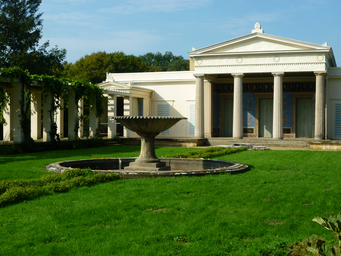
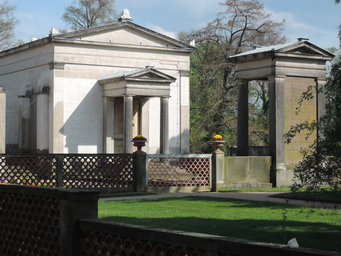
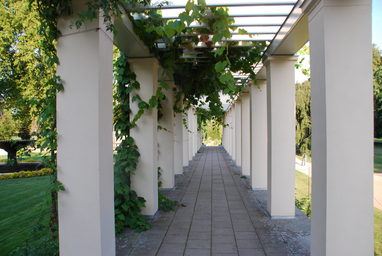
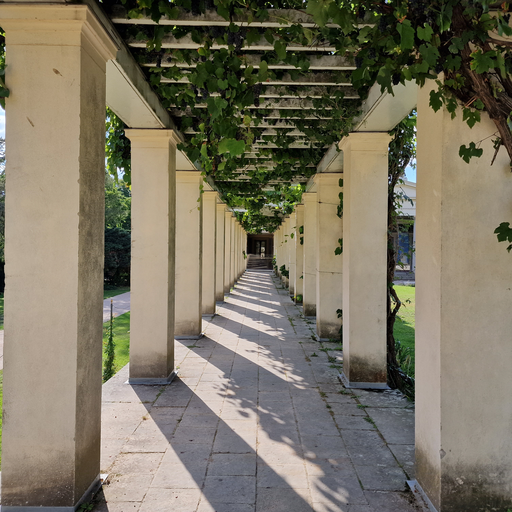
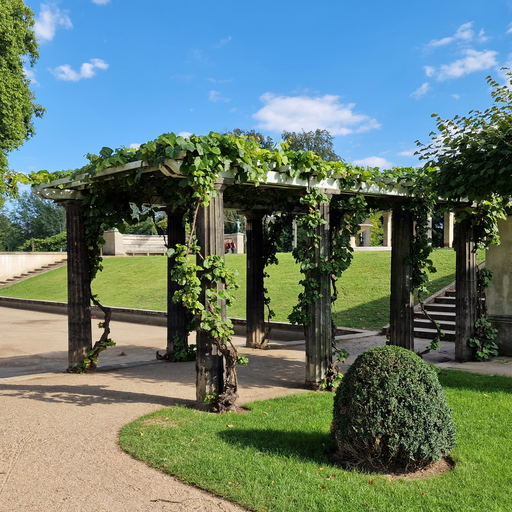
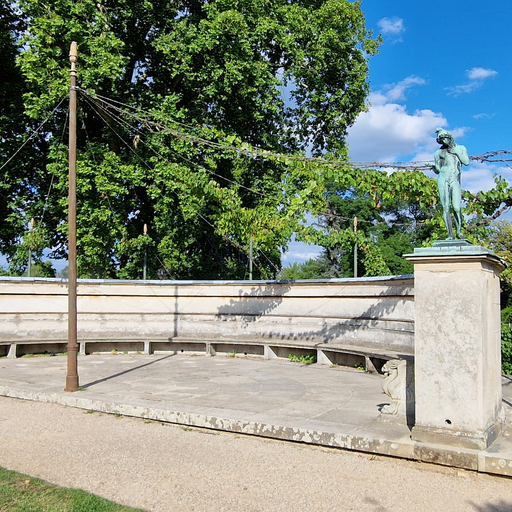
Neoclassical summer palace in Sanssouci Park, Potsdam, Germany.
Charlottenhof Palace, located in Potsdam, Germany, was the summer residence of Crown Prince Friedrich Wilhelm, later King Friedrich Wilhelm IV of Prussia. Designed by architect Karl Friedrich Schinkel in a neoclassical style, it is part of the UNESCO World Heritage site of Palaces and Parks of Potsdam and Berlin.
Charlottenhof Palace, located in Potsdam, Germany, is a neoclassical palace within the Sanssouci Park. Originally a manor house built between 1756 and 1758, it was acquired by Crown Prince Frederick William in 1825. He commissioned the renowned architect Karl Friedrich Schinkel to redesign it into a summer residence in the style of ancient Roman villas. The transformation took place from 1826 to 1829, with Schinkel's student Ludwig Persius assisting in the project. The palace is noted for its classical architecture, featuring a rusticated base, high windows, and a monumental entrance inspired by the Thrasyllos Monument in Athens. The interior retains much of its original design, with ten rooms showcasing Schinkel's furniture and thematic decor. The most unique room is the "tent room," styled after Roman military tents, with blue and white striped wallpaper and matching furnishings. The surrounding Charlottenhof Park, designed by landscape architect Peter Joseph Lenné, integrates geometric elements into the English landscape style, featuring trees, meadows, and water sourced from the Havel River. Since 1990, Charlottenhof Palace has been part of the UNESCO World Heritage Site "Palaces and Parks of Potsdam and Berlin," highlighting its historical and architectural significance.