Neoclassical palace in Potsdam, Germany, part of UNESCO heritage.
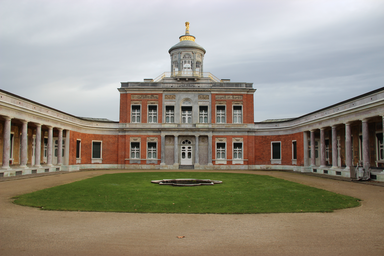
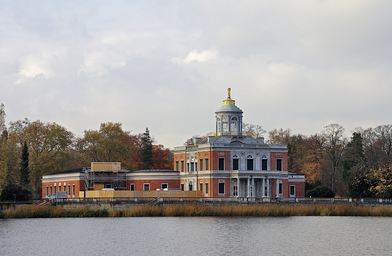
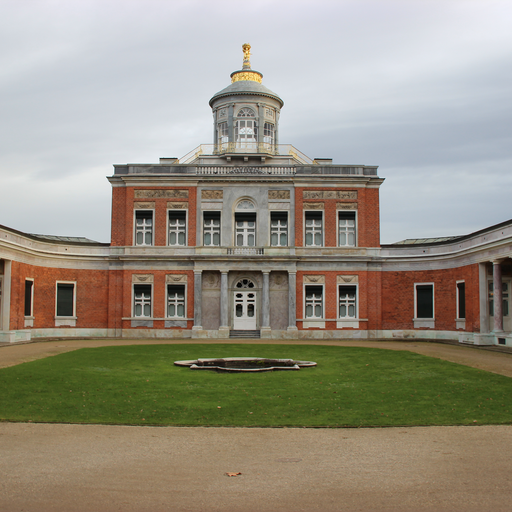
The Marmorpalais is a neoclassical palace in Potsdam, Germany, built between 1787 and 1792 for King Frederick William II of Prussia. Located in the New Garden by Heiliger See, it served as a royal residence and is now part of the UNESCO World Heritage site of Palaces and Parks of Potsdam and Berlin.
The Marmorpalais, or Marble Palace, is a neoclassical château located in Potsdam, Brandenburg, Germany, within the New Garden on the shores of Heiliger See. Commissioned by King Frederick William II of Prussia, it was constructed between 1787 and 1792 by architects Carl von Gontard and Carl Gotthard Langhans. The palace served as a summer residence for the king, who sought to distance himself from the baroque and rococo styles favored by his predecessor, Frederick the Great. The building is primarily made of red brick, with decorative elements of Silesian grey and white marble, which gives the palace its name. In 1797, extensions were added by Michael Philipp Boumann, but the project was left incomplete upon the king's death. The palace later housed members of the royal family, including Prince Wilhelm, who became Kaiser Wilhelm I, and his grandson, Kaiser Wilhelm II. After World War I, the palace was transferred to the Prussian Palaces and Gardens Foundation and opened as a museum in 1932. It suffered damage during World War II but was restored and reopened to the public. Today, the Marmorpalais is part of the UNESCO World Heritage Site "Palaces and Parks of Potsdam and Berlin."