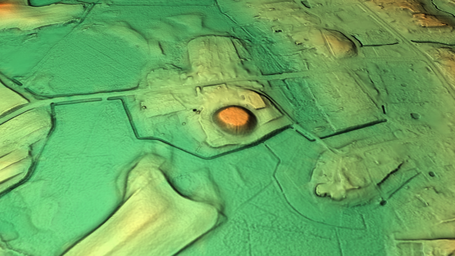
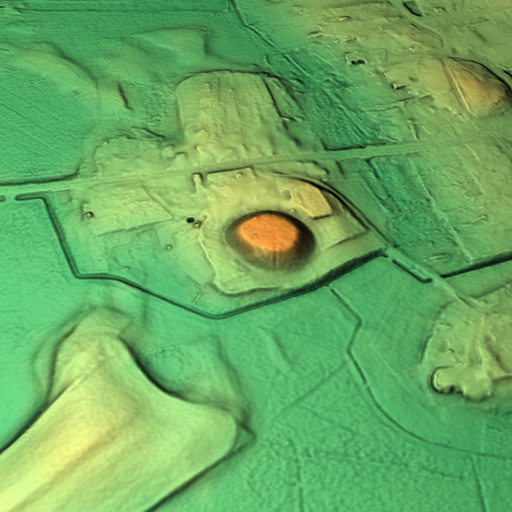
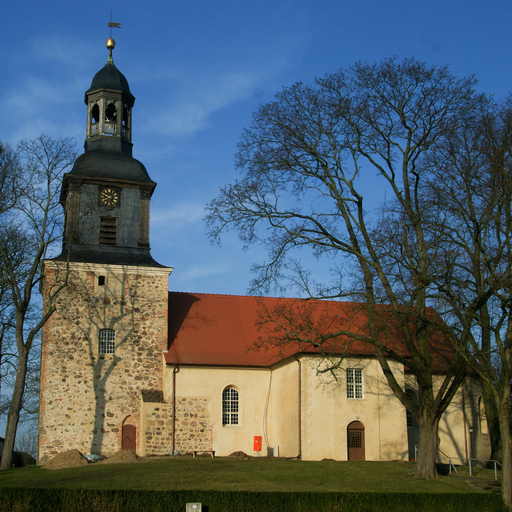
Medieval motte castle ruin near Vehlefanz, Brandenburg, Germany.
Botscheberg, also known as Bosselberg, is a medieval motte castle located at the western edge of Vehlefanz in Brandenburg, Germany. Dating back to the 10th century, it features a distinctive conical mound and was originally surrounded by a moat, with archaeological finds indicating Slavic and early German influences.
Botscheberg, also known as Bosselberg, is a medieval motte (a type of tower hill castle) located at the western edge of Vehlefanz, part of the Oberkrämer municipality in the Oberhavel district of Brandenburg, Germany. This artificial conical hill, with a top diameter of about 30 meters, is situated in a small swampy lowland in the central part of the Ländchen Glien. The castle's form and size suggest it was constructed in the 10th century, likely linked to the first eastward expansion around 930. Originally, the hill was surrounded by a moat and featured a bailey on the northeast side, which has since disappeared. Archaeological finds include Slavic and early German (12th century) pottery shards and natural stones with lime mortar remnants, indicating a former stone building with a timber framework. The purpose of this motte remains debated, but its location is precisely between the former Slavic castles of Tietzow and Bötzow (now Oranienburg), each a day's journey of 25 km apart. This strategic positioning might explain the name Botscheberg, as one could see the Bötzow castle from the tower. In the 11th century, Slavic use resumed before the hill was incorporated into Burg Vehlefanz in the 12th or 13th century.