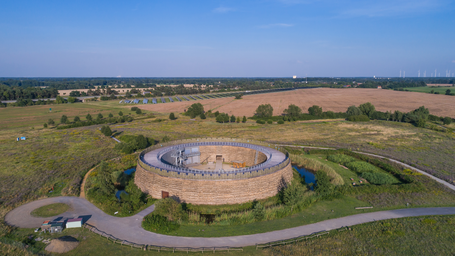
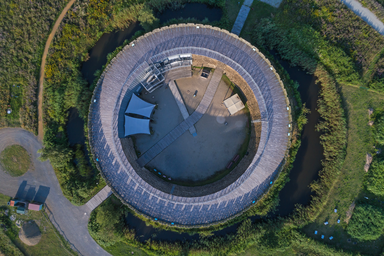
Slawenburg Raddusch is a reconstructed Slavic fortress near Raddusch in Vetschau, Brandenburg, Germany. Originally built by the Lusitian tribe in the 9th century, it served as a refuge during danger. Now a museum, it showcases Slavic architecture and history, featuring exhibits on Lower Lusatia's archaeology.
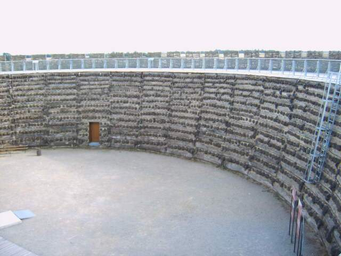
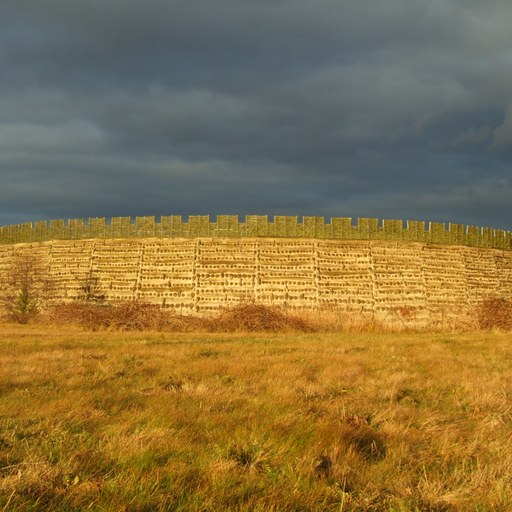
Slawenburg Raddusch is a reconstructed Slavic fortress located near the village of Raddusch in Vetschau/Spreewald, Brandenburg, Germany. Originally built by the Lusitian tribe around the 9th century, it served as a refuge for local inhabitants during times of danger. The fortress was constructed using oak logs, with walls filled with sand and clay for reinforcement, and surrounded by a moat. It featured two gates and various wooden buildings, including a well. Over time, the original structure fell into disrepair and eroded, but remnants were rediscovered during lignite mining activities in the 1980s. Archaeological excavations conducted between 1984 and 1990 uncovered artifacts, including a wooden statue dating back approximately 1100 years. Following the fall of the DDR, the Brandenburg State Office for Monument Conservation and Archaeology reconstructed the site using funds from previous mining activities. The current structure, completed in 2001, serves as a museum dedicated to Slavic architecture and history, offering exhibits on the archaeology of Lower Lusatia over the past 12,000 years. It includes a conference room and restaurant, and hosts guided tours and educational programs. Slawenburg Raddusch is an important cultural heritage site, preserving the history of early Slavic civilization in Germany.