Historic Gibraltar botanical garden and park complex, founded in 1816.
Alameda Gardens, also known as Gibraltar Botanic Gardens, is a park and botanical garden complex in Gibraltar of about 6–8 hectares. Initiated in 1816 by Governor George Don, it was created as a public recreation area and later redeveloped from 1991 as a botanic garden with research and educational roles.
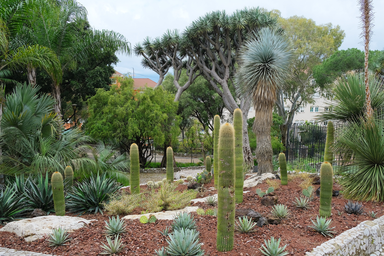
Alameda Gardens, also called Gibraltar Botanic Gardens or The Alameda, is a park and botanical garden complex in Gibraltar, covering about 6–8 hectares. The gardens were initiated in 1816 by Governor George Don to provide a public recreation space for the civilian population and stationed soldiers, on a site known as the Grand Parade. The area had previously been used for public assemblies and parades, as a source of building materials, as a vegetable garden during sieges, and partly as a cemetery. Funding came from voluntary contributions from Gibraltar’s residents and garrison, public lotteries, and collections by the Amateur Theatre. The gardens later fell into neglect from the 1970s. In 1991 the Gibraltar Government contracted an external company to restore the site and convert it into a botanical garden, launching the Gibraltar Gardens Botanic Project and appointing John Cortes as director. Since 1991 many plant species have been introduced, including native species and others from former British territories such as Australia and South Africa. The garden specialises in Aloe and Crassulaceae plants and in endemic plants from Gibraltar and surrounding areas. In 1994 the Alameda Wildlife Conservation Park was created in the southern part of the gardens.