Trio of historic city gates in Gibraltar’s Charles V Wall.
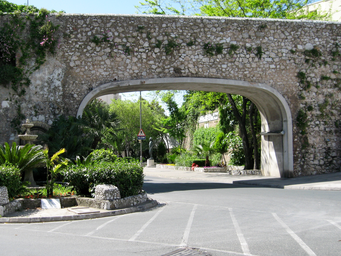
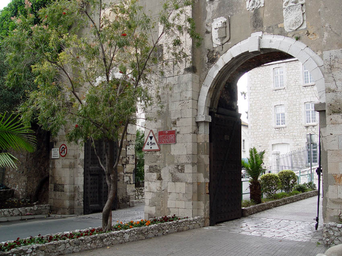
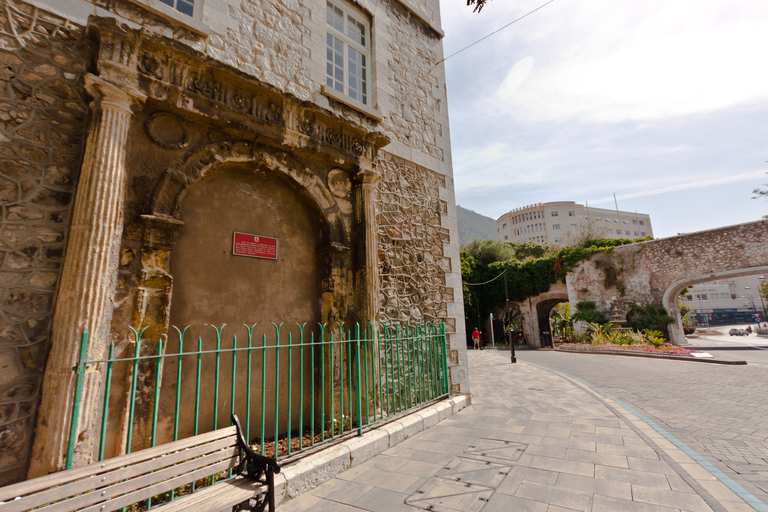
Southport Gates are three historic city gates in Gibraltar’s Charles V Wall, part of the 16th‑century fortifications. The original and New Southport Gates stand on Trafalgar Road, while Referendum Gate, the widest, opens onto Main Street. They lie between South and Flat Bastions near Trafalgar Cemetery and are listed by Gibraltar Heritage Trust.
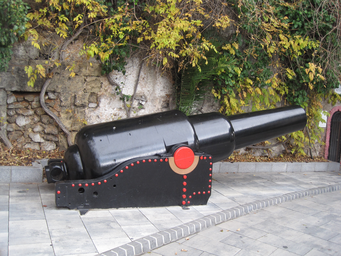
Southport Gates are three adjoining city gates in the British Overseas Territory of Gibraltar. They are set in the Charles V Wall, one of the early fortifications of Gibraltar that defended the city’s former southern limit. The gates stand between South Bastion to the west and Flat Bastion to the east, at the bottom of Trafalgar Hill, adjacent to Trafalgar Cemetery. The original Southport Gate, formerly known as Africa Gate, is the earliest of the trio. It was constructed in 1552 by Italian engineer Giovanni Battista Calvi, under the reign of Charles V, Holy Roman Emperor. The gate bears the Royal Arms of Charles V as well as the coat of arms of Gibraltar, and appears in a 1627 map of Gibraltar by Spanish engineer Luis Bravo de Acuña, where it is labelled “Puerta de África.” Defensive elements included the Southport Ditch, South Bastion and Flat Bastion. A second opening, the New Southport Gate, was added in 1883 at present‑day Trafalgar Road. The third and widest, Referendum Gate, was constructed in 1967 at Main Street, immediately west of the first two gates. Southport Gates, together with a rifled muzzle‑loading ten‑inch 18‑ton gun nearby, are listed with the Gibraltar Heritage Trust and are open to the public.