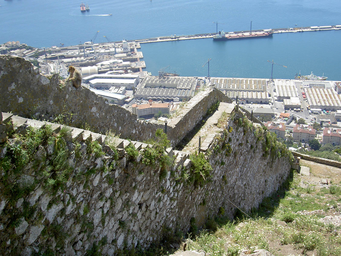
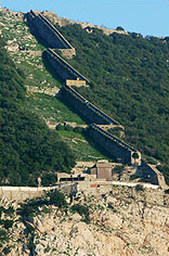
Sixteenth-century defensive wall climbing the Rock in Gibraltar, UK.
The Charles V Wall is a 16th‑century defensive curtain wall forming part of Gibraltar’s fortifications. Built in 1540 and strengthened in 1552 by Emperor Charles V, it runs from South Bastion by the harbour up the Rock of Gibraltar. Largely intact, it is owned by the Government of Gibraltar and open to the public.
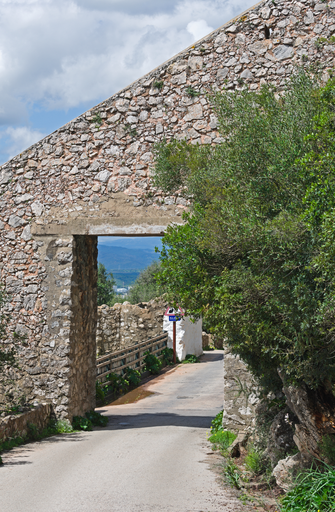
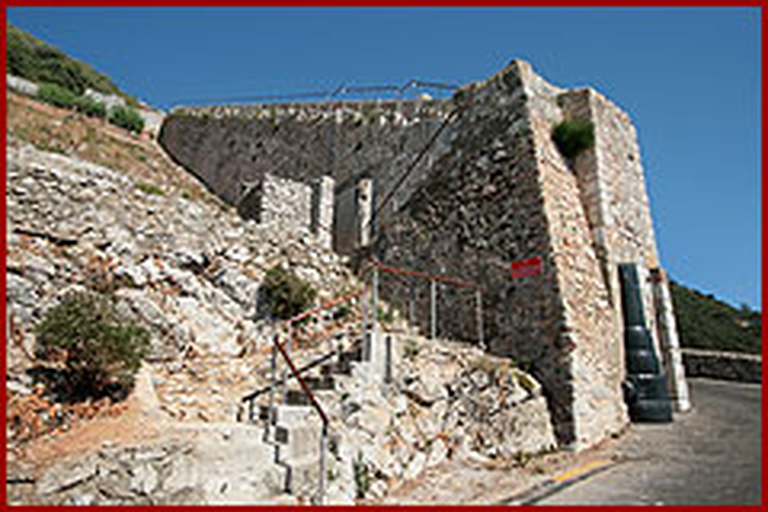
The Charles V Wall is a 16th‑century defensive curtain wall that forms part of the fortifications of the British Overseas Territory of Gibraltar. Originally called Muralla de San Benito (St Benedict’s Wall), it was built in 1540 to help defend the Rock of Gibraltar after a devastating Barbary corsair raid that year, and was strengthened in 1552 by Emperor Charles V. The wall remains largely intact and extends from the South Bastion, which was once at the water’s edge in Gibraltar’s harbour, up to the top ridge of the Rock of Gibraltar. The lower section runs from South Bastion to Prince Edward’s Gate at the base of a steep cliff. It was originally pierced by the Puerta de África (Gate of Africa), defended from above by the Flat Bastion. The upper section, somewhat further south, climbs from the top of a cliff to the crest of the Rock, zigzagging in four stages so defenders could deliver flanking fire along each face. Another 16th‑century line, the Moorish or Philip II Wall, runs roughly parallel as a fallback defensive wall. Today the Charles V Wall, owned by the Government of Gibraltar and open to the public, survives as a prominent monument of Gibraltar’s historic fortifications.