Prehistoric archaeological sea caves on Gibraltar’s Mediterranean Steps walking route.
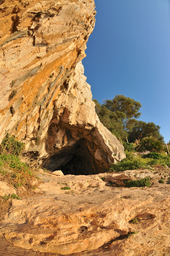
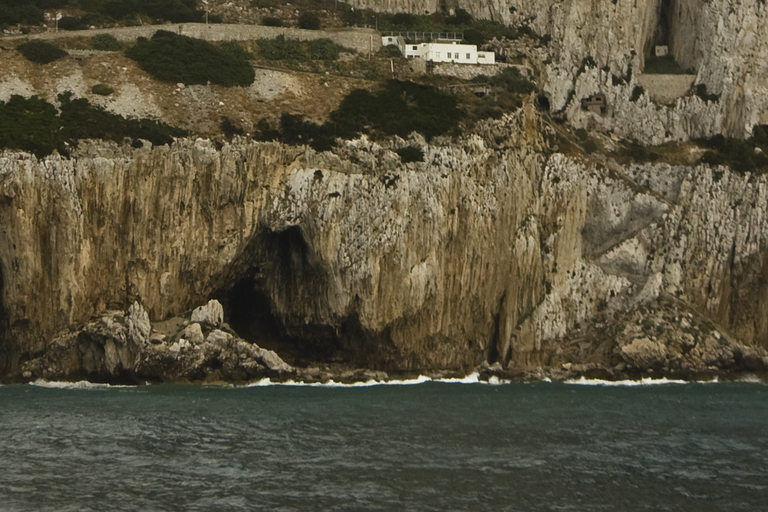
Goat’s Hair Twin Caves are sea caves on Gibraltar’s eastern side, above the Mediterranean Steps path. Formed along vertical fractures, they have large triangular entrances and clear marine erosion. Excavations uncovered Palaeolithic and Neolithic archaeology, including multiple skeletons with grave goods, leading to protection under Gibraltar’s Heritage and Antiquities Act.
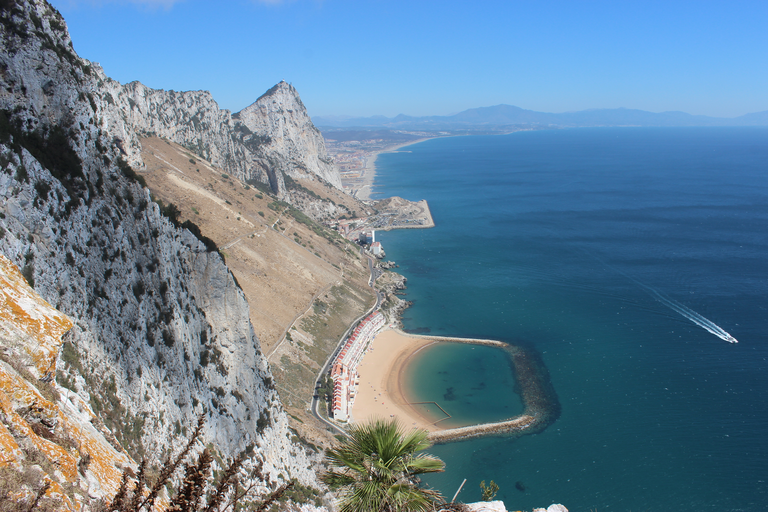
Goat’s Hair Twin Caves are a pair of sea caves on the eastern side of Gibraltar, reached via the Mediterranean Steps. Located around 190 metres above sea level, they sit side by side about 30 metres above the path leading to Martin’s Cave. Both caves have large, triangular entrances and were formed along vertical fractures, with marine erosion evident in their structure. Historically known as Sewell’s Fig Tree Caves, they were named Goat’s Hair Twin Caves after use as a goatherd’s refuge in the nineteenth century, when large amounts of goat hair were found on the walls. The caves were explored and partly excavated in 1867 by Captain Brome, and later heavily excavated by the Gibraltar Cave Research Group led by George Palao between 1969 and 1970, reaching bedrock. Excavations revealed important Palaeolithic and Neolithic archaeology. In one cave, archaeologists uncovered a prehistoric ceremonial burial: a female skeleton with a crushed skull, accompanied by clay pots, stone tools, a pendant, and stone armlets and anklets. Additional skeletons, some female with similarly crushed skulls, and associated grave goods were also found. These discoveries indicate Neolithic ceremonial burials and beliefs in life after death. In 2018, the caves were formally listed under Gibraltar’s Heritage and Antiquities Act.