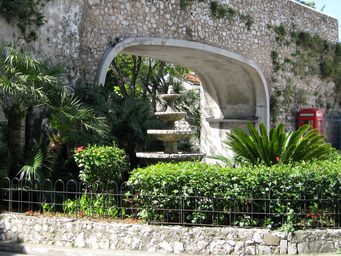
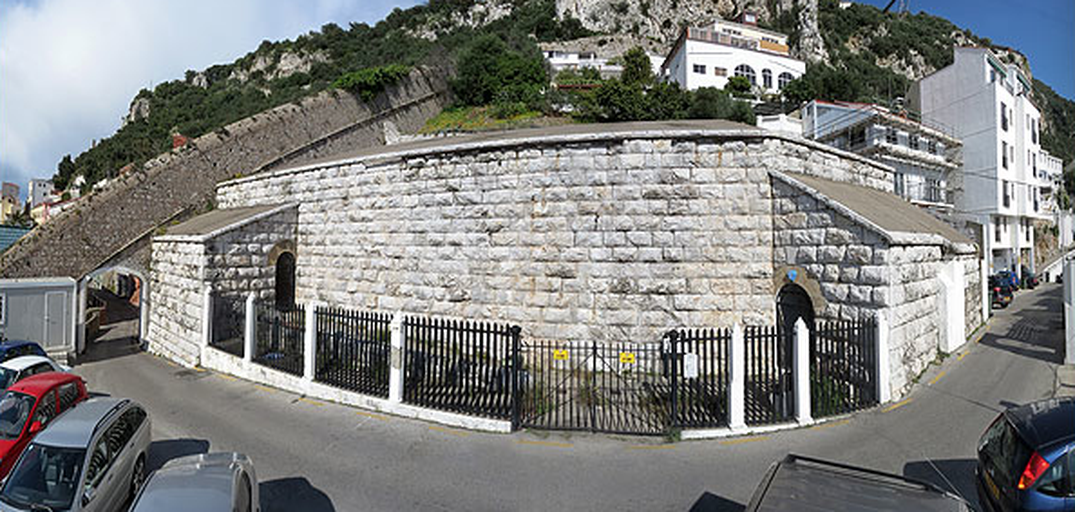
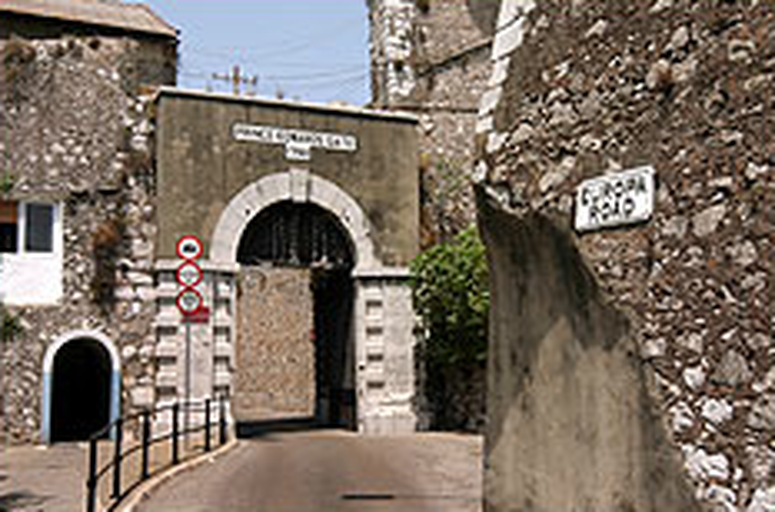
Sixteenth-century Spanish bastion projecting from Charles V Wall in Gibraltar.
Flat Bastion is a masonry bastion projecting south from the Charles V Wall in Gibraltar. Built by the Spanish in the mid sixteenth century as part of Gibraltar’s southern defences, it later mounted various guns. Its eastern section contains Flat Bastion Magazine, restored as a geological research and exhibition facility.
Flat Bastion is a masonry bastion in the British Overseas Territory of Gibraltar. It projects southward from the Charles V Wall and formed part of the city’s southern defences alongside the wall, Southport Gates, Southport Ditch and South Bastion. Originally Spanish, it was begun in 1552 and referred to as St. Jago’s or Santiago’s Bastion, also known in Spanish as Baluarte de Santiago. By 1627 it had been built, and an earlier 1608 map of Gibraltar by Cristóbal de Rojas already shows both Flat Bastion and South Bastion, although the British later claimed the Spanish had not finished Flat Bastion. Its name refers to the shape of its south-facing walls, which meet at an obtuse, relatively flat angle almost parallel to the Charles V Wall, rather than to the slope of the ground, which is sloping. In 1859 six guns, four 12-pounders and two 12‑pound carronades, were installed there, and four years later five 32‑pounders were mounted. The eastern portion contains Flat Bastion Magazine, now a restored geological research and exhibition facility. Flat Bastion and Flat Bastion Magazine are separately listed as listed buildings by the Gibraltar Heritage Trust.