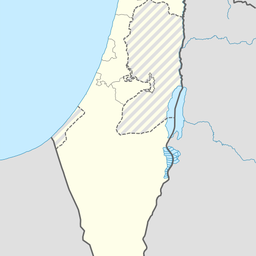
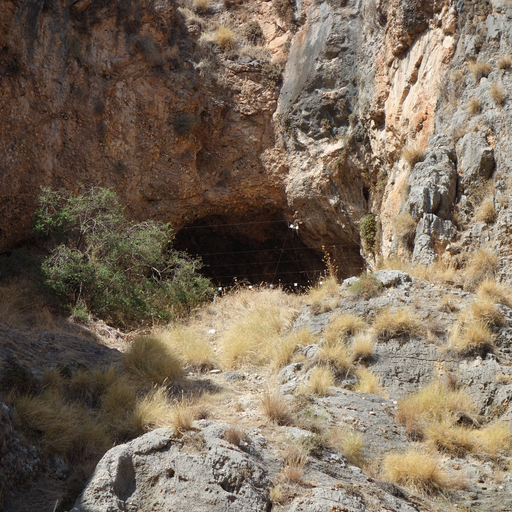
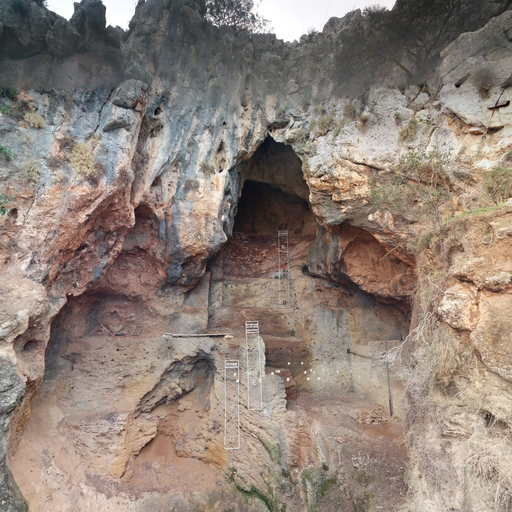
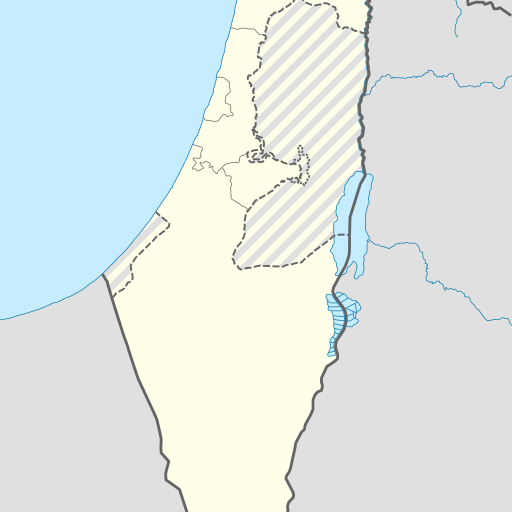
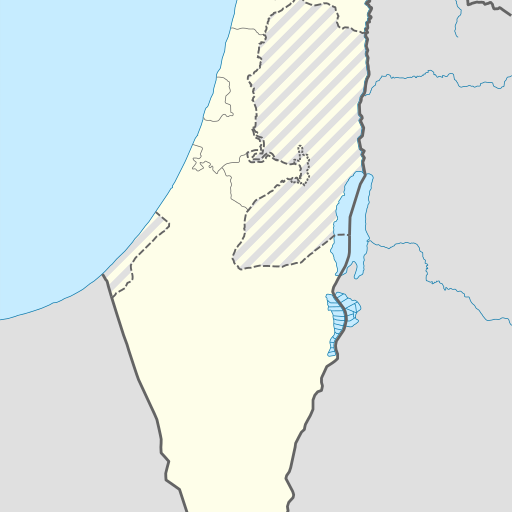
Cave in Israel's Northern District, Kinneret region.
Cave in Israel's Northern District, known as Me‘arat Ha‘Ammud. Located near Maghār, it has a Mediterranean climate with an average annual rainfall of 419 mm. The cave is part of the Geonames database and is accessible via Viewfinder Panoramas digital elevation model.
Me‘arat Ha‘Ammud, also known as Amud Cave, is a significant archaeological site located in the Northern District of Israel. Situated near the Sea of Galilee, it features extensive cave systems and has been crucial for understanding early human habitation in the region. Discovered in 1925 by British archaeologist Dorothy Garrod, the cave contains layers of sediment that span over half a million years, providing evidence of various hominin species including Homo erectus and Neanderthals. The site's stratigraphy offers insights into climatic changes and human evolution, with artifacts such as stone tools and animal bones found in different levels. Excavations have uncovered remains from the Middle Paleolithic period through to the Natufian era, making it a key location for studying prehistoric cultures. The cave’s unique geological features include stalactites and stalagmites, adding to its scientific importance. Today, Me‘arat Ha‘Ammud is managed by the Israel Nature and Parks Authority as part of an archaeological reserve. Visitors can explore guided tours that highlight the site's historical significance and ongoing research efforts. Its location in a scenic area near the Jordan River Valley enhances its appeal for both educational purposes and tourism.