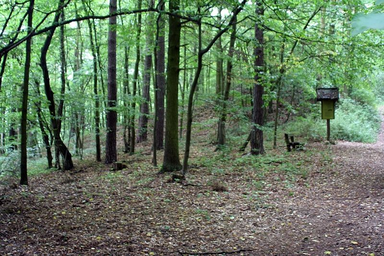
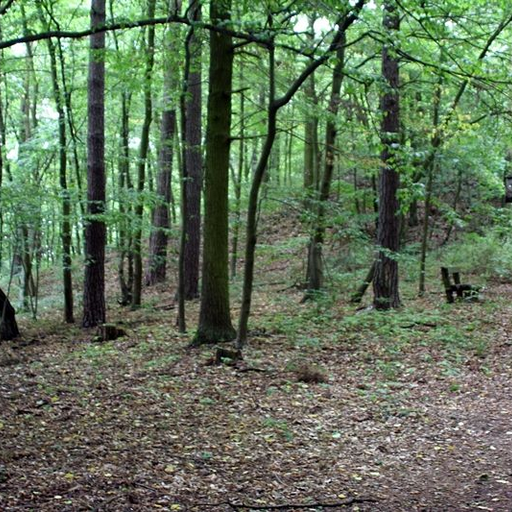
Slavic hillfort ruins on a wooded hill in Waldsieversdorf.
Burgwall Waldsieversdorf is a Slavic hillfort located in Waldsieversdorf, Brandenburg, Germany. Dating from the 7th to 9th centuries, it features two earth walls designed for defense. The site, now a cultural heritage monument, once accommodated up to 1,000 people and has yielded archaeological finds like pottery and tools.
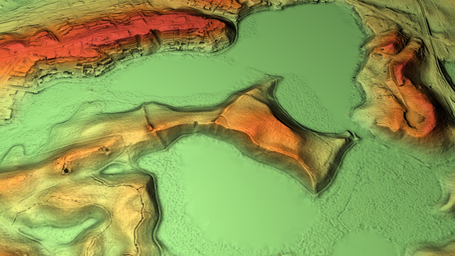
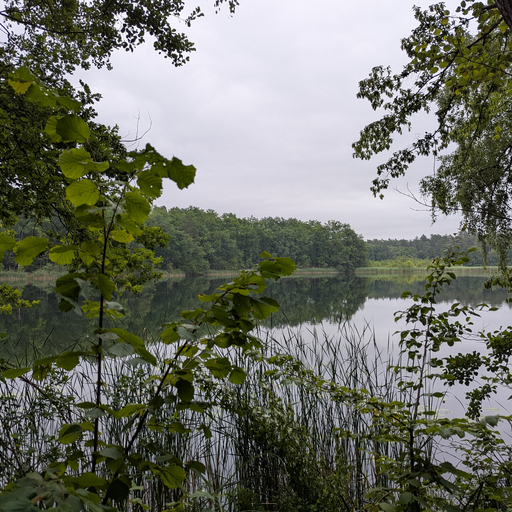
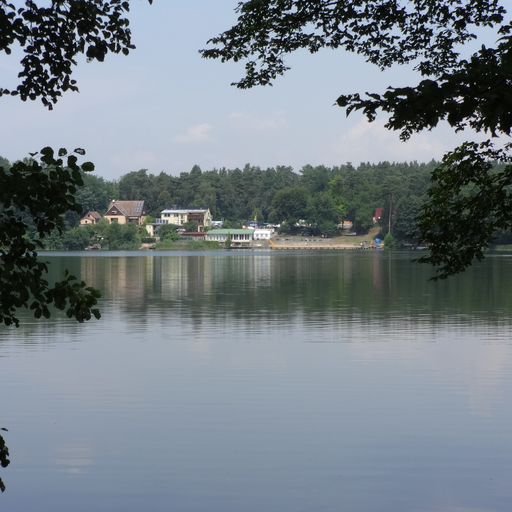
Burgwall Waldsieversdorf is a historical site located in the municipality of Waldsieversdorf, within the Märkisch-Oderland district of Brandenburg, Germany. This site is the remains of a Slavic hillfort, known as a "Burgstall," which dates back to the 7th to 9th centuries. Situated on a wooded hill between the Großer and Kleiner Däbersee, the fortification served as a defensive structure for the local population. The site consists of two earthen ramparts designed to repel attackers approaching from the west. Covering an area of approximately 3.5 hectares, the hillfort is a classic example of the Feldberger type, featuring both a main and a fore-castle. This type of fortification was common during the early Slavic period and provided a fortified refuge for up to 1,000 people. By the 9th century, like many similar structures of the time, the hillfort was abandoned. Archaeological excavations at the site have uncovered ceramic shards, whetstones, animal bones, and an iron sickle, offering insights into the daily life and activities of its former inhabitants. Today, Burgwall Waldsieversdorf is recognized as a cultural heritage monument in Germany, preserving the historical significance of this early medieval fortification.