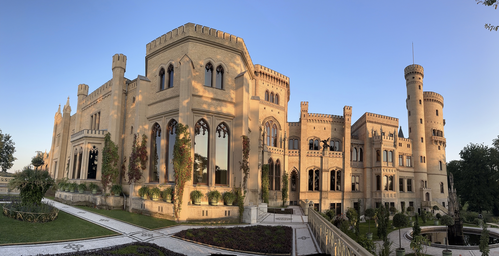
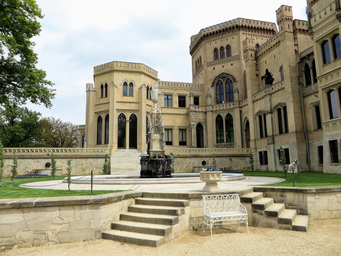
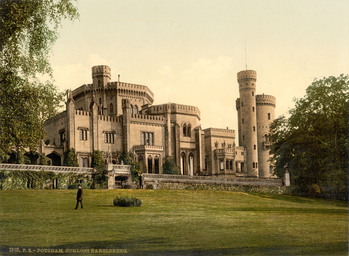
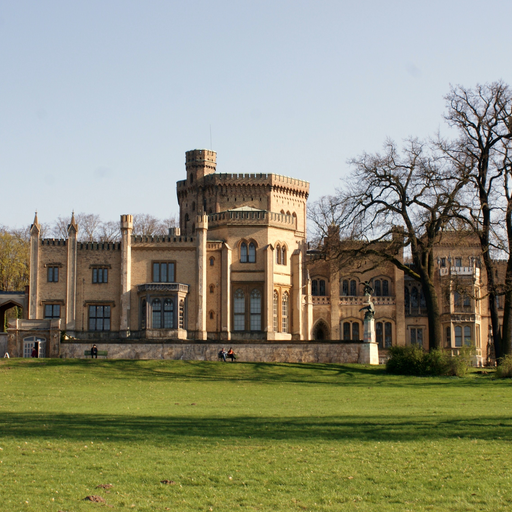
Neogothic palace in Potsdam, former summer residence of Wilhelm I.
Babelsberg Palace, located in Potsdam, Germany, is a neo-Gothic architectural masterpiece designed by Karl Friedrich Schinkel, Ludwig Persius, and Heinrich Strack. Built between 1835 and 1849, it served as the summer residence of Prince Wilhelm, later Emperor Wilhelm I. It is part of the UNESCO World Heritage Site "Palaces and Parks of Potsdam and Berlin."
Babelsberg Palace, located in Potsdam, Germany, is a historic neo-Gothic château that served as the summer residence of Prince William, later Emperor William I of Germany, and his wife Augusta. The palace is situated within Babelsberg Park, near Berlin, and is part of the Palaces and Parks of Potsdam and Berlin, a UNESCO World Heritage Site since 1990. Designed by architects Karl Friedrich Schinkel, Ludwig Persius, and Johann Heinrich Strack, the palace was constructed in two phases between 1835 and 1849. The English Gothic Revival style of the palace reflects the romantic medievalism popular at the time. Babelsberg Palace is notable for its historical significance, including the 1862 meeting between William I and Otto von Bismarck, which led to Bismarck's appointment as Minister-President of Prussia. The palace has undergone extensive renovations since 2013 to restore its façades and interiors. Managed by the Prussian Palaces and Gardens Foundation Berlin-Brandenburg, the palace remains a significant cultural and architectural landmark. It also served as a model for the construction of Kittendorf Castle by Friedrich Hitzig, a student of Schinkel. The palace is currently a museum, showcasing its rich history and architecture.