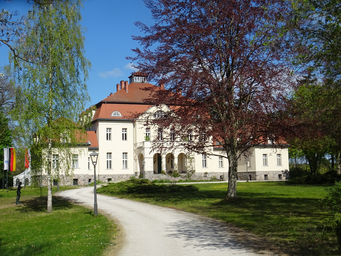
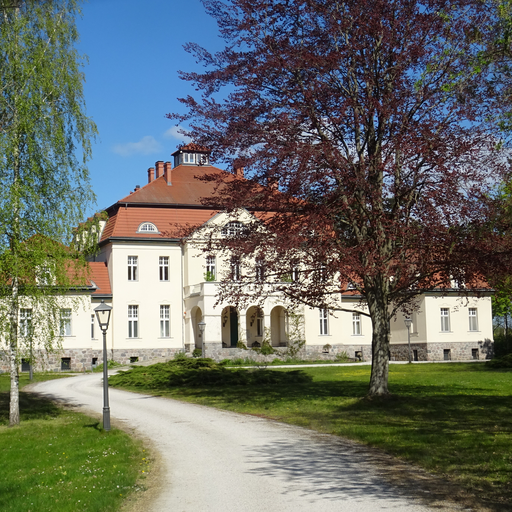
Baroque château and heritage monument in Liebenberg, Brandenburg, Germany.
Schloss Seehaus is a heritage château in Liebenberg, Brandenburg, Germany. Originally documented around 1300, it was rebuilt in its present baroque three-wing form around 1780 after destruction in 1632. Today it is privately owned and used for public concerts, celebrations, rehearsals, recordings, and overnight stays.
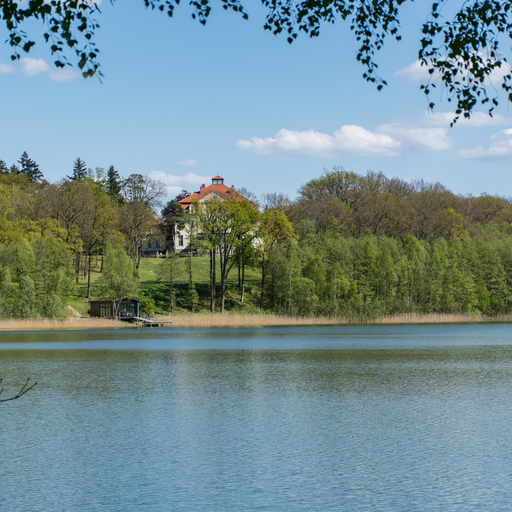
Schloss Seehaus is a château and protected architectural monument in Liebenberg, Brandenburg, Germany. A “Hauss ym See” on an island in the middle of a large pond was documented around 1300. In the 16th century, Georg Ludwig von Seinsheim built Schloss Seehaus at its present site. In 1632 Swedish forces burned it down to the foundations. It passed to the Counts of Schwarzenberg in 1655, and the rebuilt three-wing Baroque complex in its current form largely dates from about 1780, executed by the Schwarzenberg architect Joseph Brockhard. The estate served administrative purposes, including collecting and storing tithes, and from 1816 it housed the princely Schwarzenberg court of Hohenlandsberg. The east wing was altered to include living quarters and nine heated prison cells. The west wing contained a Catholic chapel, while a Catholic school also operated in the castle for many years. The surrounding lake was drained before 1780 and turned into pastureland. After the Second World War, the property changed hands several times and was at times used as a refugee camp. Since 1971 it has been owned and renovated by the Kobow family and later associated owners. Since 2001 Schloss Seehaus has hosted public concerts and is also used privately for celebrations, rehearsals, recordings, seminars, and overnight stays.