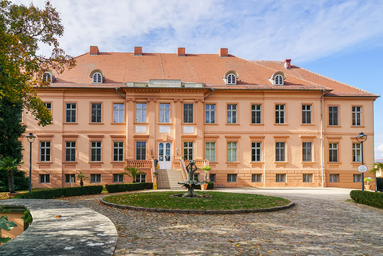
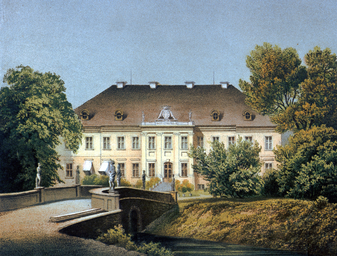
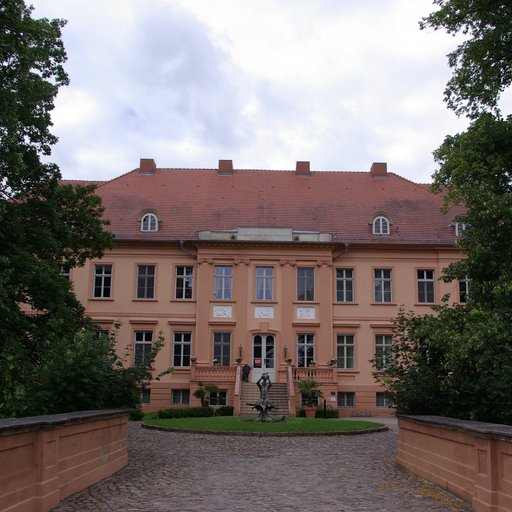
Historic hotel in Rühstädt, Brandenburg, with classical architecture.
Schloßhotel Rühstädt is a historic hotel in Rühstädt, Brandenburg, Germany. Originally built as a palace in 1782 by Magdalene von Jagow, it features early-classical architecture. Converted into a hotel in 2002, it is surrounded by natural landscapes and known for its picturesque setting and nesting storks.
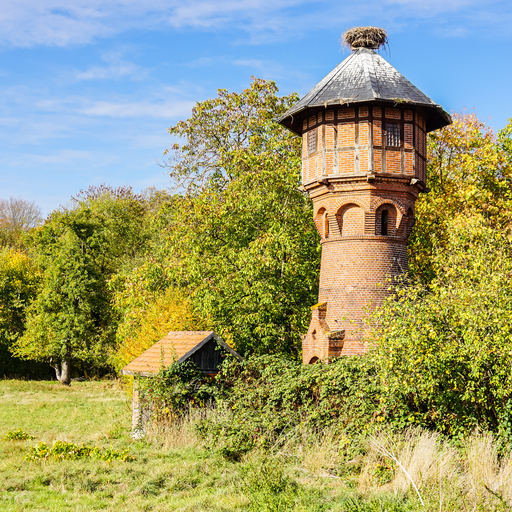
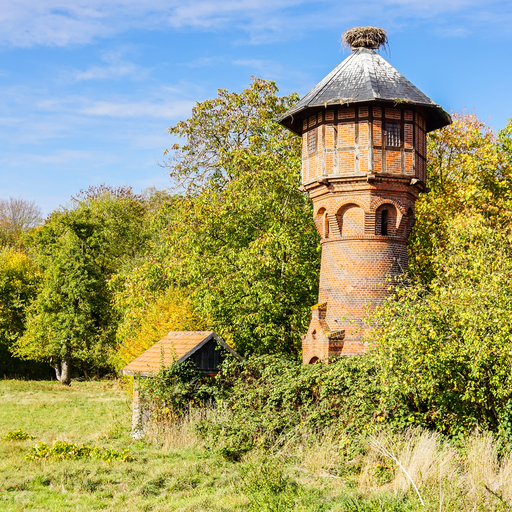
Schloßhotel Rühstädt is a historic hotel located in the village of Rühstädt, part of the Prignitz district in Brandenburg, Germany. Originally constructed as a palace between 1780 and 1782 by Magdalene von Jagow and her husband Georg Otto Friedrich von Jagow, it was built on the site of a previous castle that had burned down. The building showcases a strict early-classical architectural style with plaster detailing. Over the years, the palace underwent several expansions, including additions in 1888–1889, 1911, and 1990–1992. A major restoration occurred between 2000 and 2001, converting it into a hotel by 2002. The two-story structure features a gable roof and prominent risalits on the courtyard facade. The complex includes an orangery, a water tower known as "Storchenturm," storage buildings, and a park. The site is recognized as an architectural heritage monument in Brandenburg. Situated near the medieval brick church of Rühstädt, the hotel offers a tranquil setting with views of the surrounding natural landscapes, including the Elbe River and nesting storks. It is located close to the charming town of Bad Wilsnack, providing opportunities for relaxation and recreation through walking and cycling paths.