Baroque manor house and heritage monument in Rogäsen, Brandenburg, Germany.
Gutshaus Rogäsen is a baroque-style manor house in Rogäsen, Brandenburg, built in 1780. It includes a park, stables, and servants' quarters. Historically owned by the von Wartensleben family, it was expropriated in 1945. Now a protected monument, it is undergoing preservation efforts.
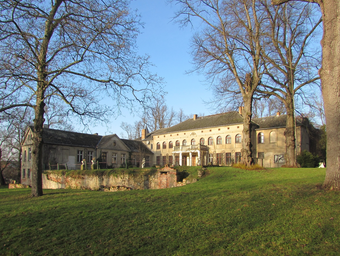
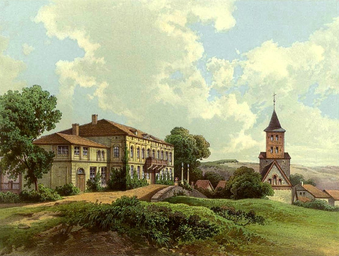
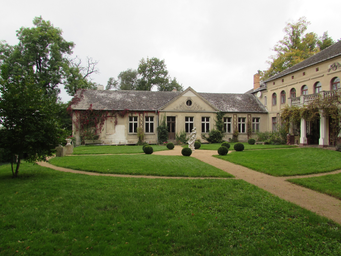
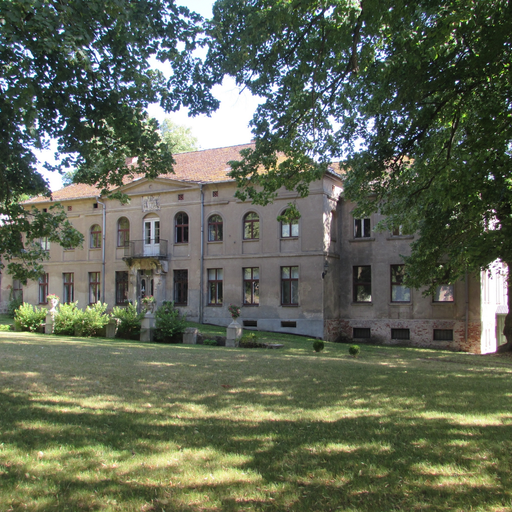
Gutshaus Rogäsen, also known as the Herrenhaus or Schloss, is a baroque-style manor house located in Rogäsen, Landkreis Potsdam-Mittelmark, Brandenburg, Germany. Built in 1780, it features a distinctive facade with a balcony and a coat of arms above the main entrance. The estate includes a park of approximately 25,000 square meters, stables, and servants' quarters, and is designated as a protected monument (Baudenkmal). Historically, the estate was owned by the von Werder family for over 500 years and later by the von Wartensleben family from the mid-19th century until 1945. After World War II, the property was expropriated by the Soviet administration and used as a command post and later for housing displaced families. In 1957, it served educational purposes as a school and kindergarten. Following the reunification of Germany, the community sought buyers to preserve the property, leading to its sale in 1997 to Berlin businessmen and later in 2000 to the König family, descendants of the last countess. Currently, Gutshaus Rogäsen is recognized as an architectural heritage monument, with ongoing preservation efforts to maintain its historical significance and structure.