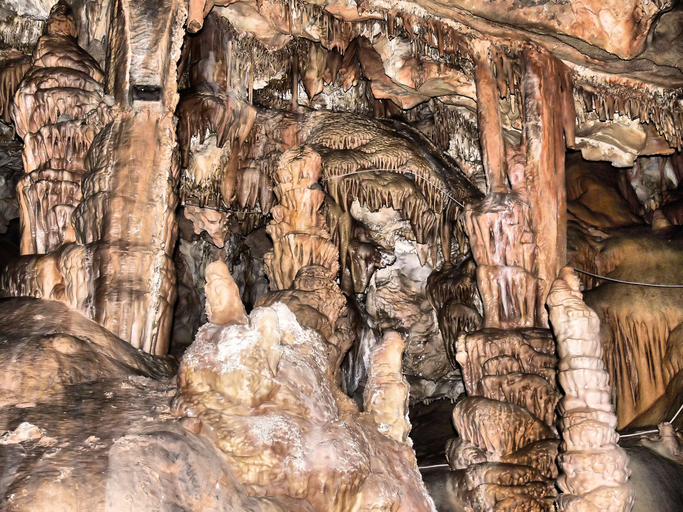
Limestone show cave network in Gibraltar’s Upper Rock Nature Reserve.
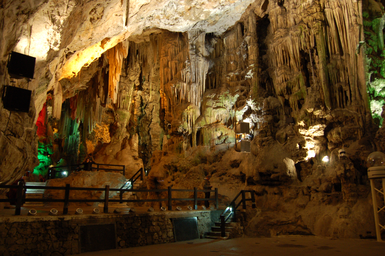
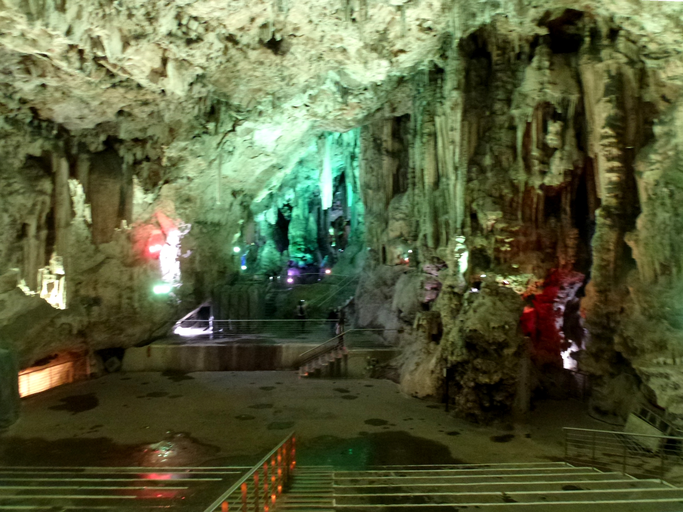
St. Michael’s Cave is a network of limestone caves in Gibraltar’s Upper Rock Nature Reserve, over 300 metres above sea level. It is the most visited of more than 150 caves inside the Rock of Gibraltar, attracting around one million visitors each year as a major tourist attraction.
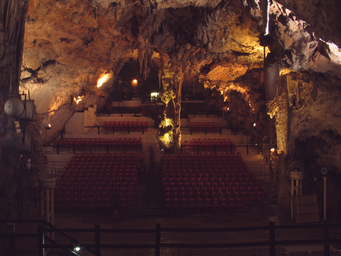
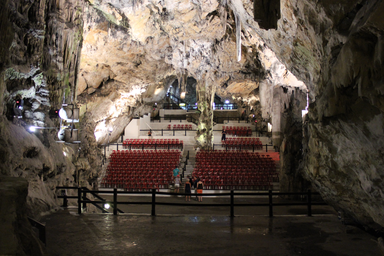
St. Michael’s Cave, also known as Old St. Michael’s Cave, is a network of solutional limestone caves within the Upper Rock Nature Reserve in the British Overseas Territory of Gibraltar. The cave lies at an elevation of over 300 metres above sea level and reaches a depth of about 62 metres, with three known entrances. It is the most visited of more than 150 caves inside the Rock of Gibraltar, receiving around one million visitors annually. The cave features numerous stalactites and stalagmites and is highlighted with artificial lighting for visitors. Evidence of early human presence includes a Neolithic bowl and cave art depicting an ibex, dated to the Solutrean period about 15,000–20,000 years ago. In 1974, traces of prehistoric people and this rock art were reported. The cave has also been used in later times as a military stronghold, and during the Second World War it was prepared for use as a military hospital, though it was never actually needed in that role. Today, St. Michael’s Cave remains one of Gibraltar’s main tourist attractions, easily accessible to the public and widely promoted as a show cave through its official website.