Limestone show cave system in Gibraltar, discovered during World War II.
New St. Michael’s Cave, or Lower St. Michael’s Cave, is a limestone cave system in the British Overseas Territory of Gibraltar. Accidentally discovered in 1942 during wartime tunnelling, it contains chambers with diverse speleothems and an underground lake. Today it is a fully lit show cave visited on organised tours.
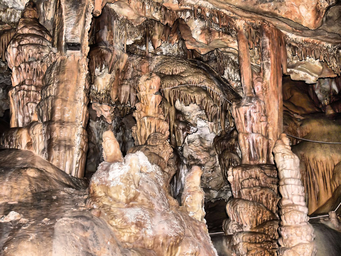
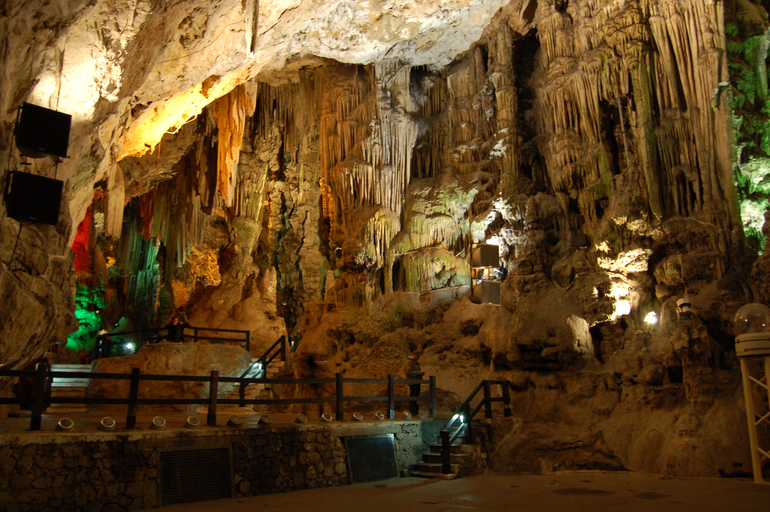
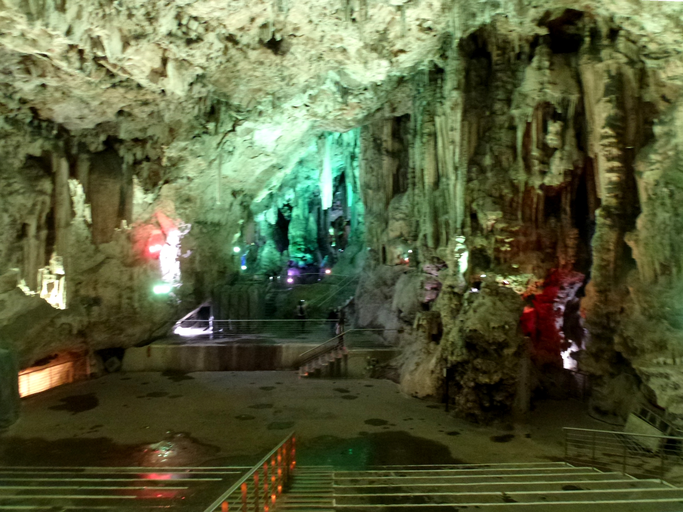
New St. Michael’s Cave, also known as Lower St. Michael’s Cave, is a limestone cave system in the British Overseas Territory of Gibraltar. It lies within the Rock of Gibraltar and is listed as a cave of Gibraltar. The cave was accidentally discovered in 1942 during World War II, when Royal Engineers were blasting inside the Rock to create an alternate entrance to the lower chambers of St. Michael’s Cave, which had been prepared as an emergency hospital. The first sign of the new system came when the tunnelling rubble disappeared through a newly opened void, revealing chambers that may have remained sealed for some 20,000 years. These chambers contain examples of almost all known cave formations, or speleothems, and include a lake nearly forty yards long holding an estimated 45,000 imperial gallons of crystal‑clear water. After the war, the cave and its visitors were supervised by the United Kingdom’s Ministry of Defence, specifically the Royal Engineers. Later, the Gibraltar Tourist Board took over management. New St. Michael’s Cave operates as a show cave, fully lit and accessible on organised, typically three‑hour guided tours that end with views of the underground lake, highlighting the cave’s diverse formations and striking natural scenery.