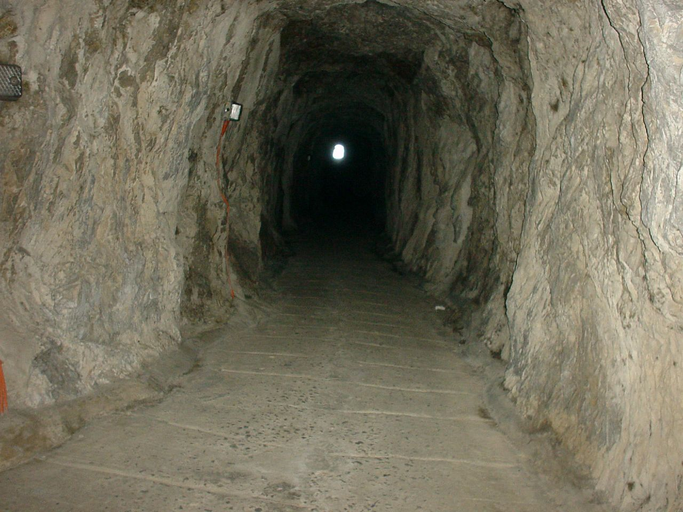
Archaeological limestone cave in Gibraltar where a Neanderthal skull was discovered.
Devil's Tower Cave is a narrow limestone cave and archaeological site in Gibraltar. Used by Neanderthals as a rock shelter, it lies on a rocky outcrop above present sea level. Excavations, notably by Dorothy Garrod, revealed a Neanderthal skull called Gibraltar 2, stone tools, animal remains, burnt bones and charcoal.
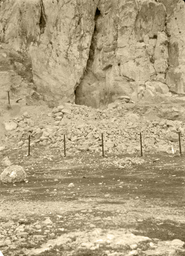
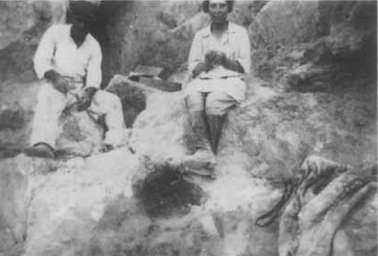
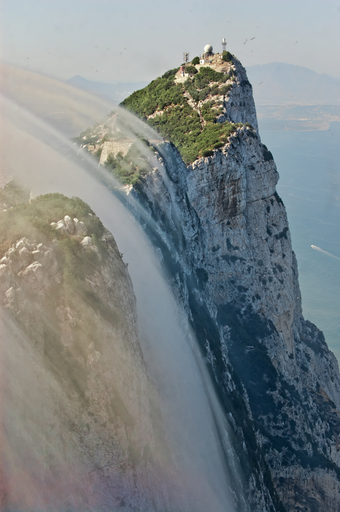
Devil's Tower Cave is a limestone cave and archaeological site in the British Overseas Territory of Gibraltar, on the Rock of Gibraltar. It is a very narrow fissure used by Neanderthals as a rock shelter, with a maximum height of just over ten metres and a width of around a metre, extending into the cliff face for approximately four metres. The cave floor lies nine metres above present sea level on a rocky outcrop. The cave was discovered by Colonel William Willoughby Cole Verner and French prehistorian Henri Breuil. Their early visits revealed Neanderthal stone tools, animal remains, several beddings of rock falls and breccias, and evidence of cooking in the form of burnt bone and charcoal. The site’s proximity to Forbes’ Quarry Cave, where the Gibraltar 1 Neanderthal skull was previously found, supported their conclusion that it had been used by “Prehistoric Man”. Between November 1925 and January 1927, Cambridge University archaeologist Dorothy Garrod excavated the site intensively, uncovering a Neanderthal skull now known as Gibraltar 2, belonging to a child of around four years of age. In 2018, Gibraltar’s Heritage and Antiquities Act confirmed Devil's Tower Cave as a Mousterian shelter and the site of a Neanderthal skull discovery.