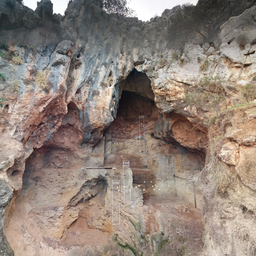
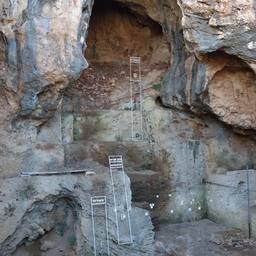
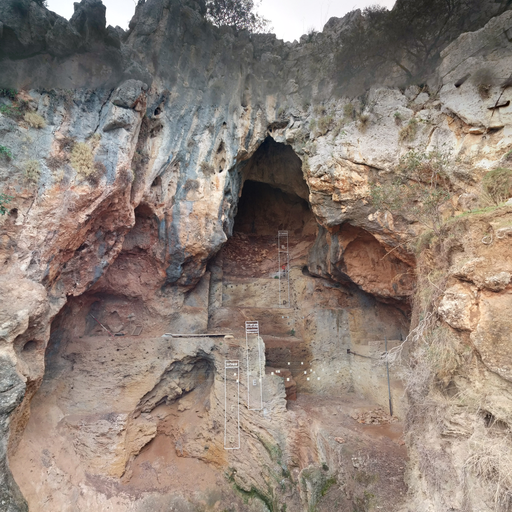
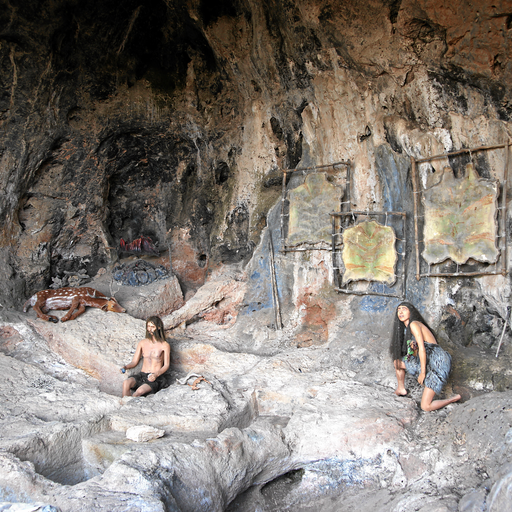
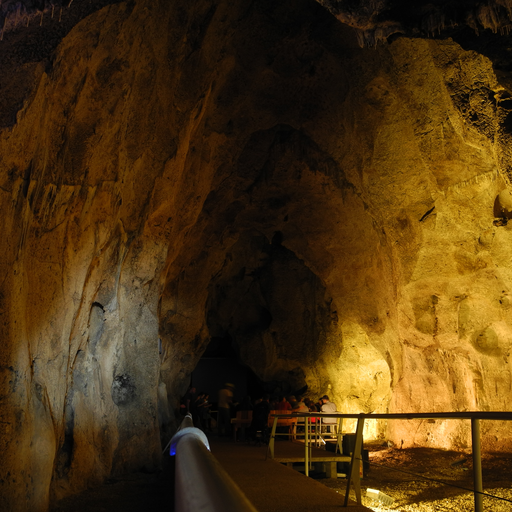
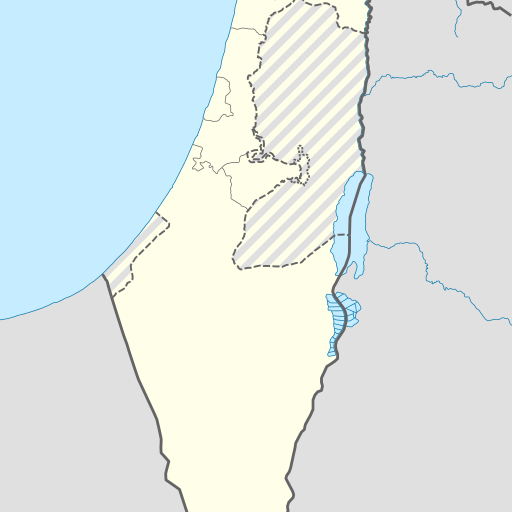
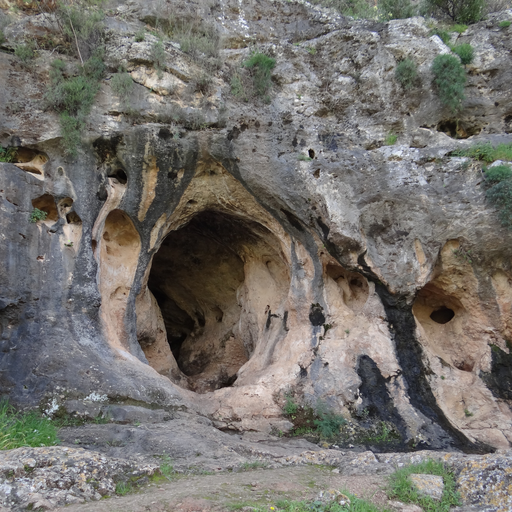
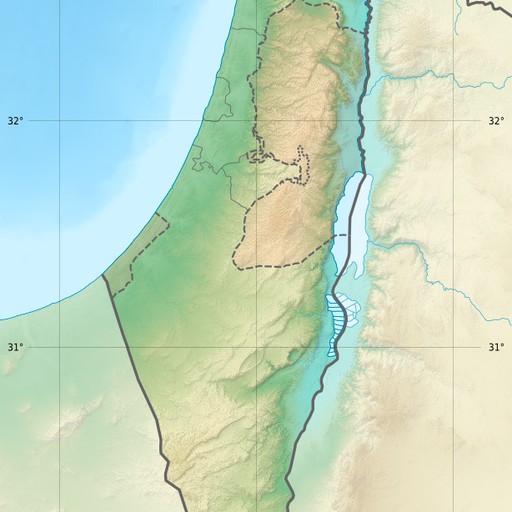
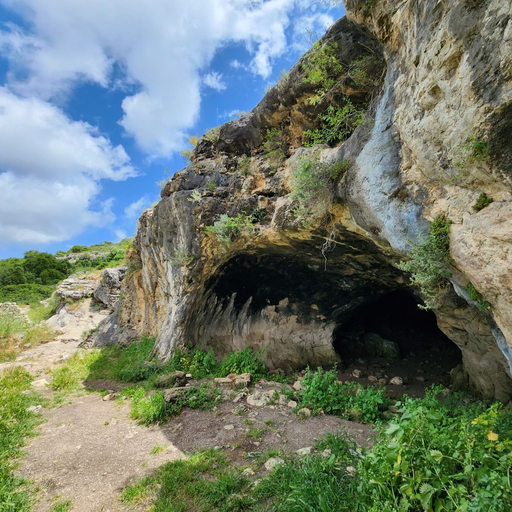
Historic cave in Israel's Carmel mountain range, part of Nahal Me’arot archaeological site.
Tabun Cave in Mount Carmel, Israel, is an archaeological site with layers dating from the Lower and Middle Paleolithic. Excavations revealed tools, hearths, and Neanderthal remains, offering insights into early human life and fire use over 350,000 years ago.
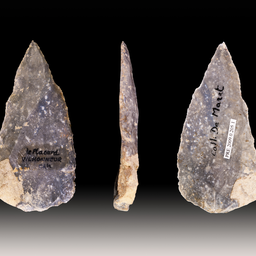
Tabun Cave is an archaeological site in the Nahal Me'arot Nature Reserve on Mount Carmel, Israel. Occupied intermittently from the Lower Paleolithic to Middle Paleolithic periods (500,000-40,000 years ago), it contains one of the longest sequences of human occupation layers in the Levant, with deposits up to 25 meters thick. The lowest levels contain marine sand and pollen indicating a warm climate when sea levels were higher. Higher layers consist mainly of clay and silt, suggesting cooler, wetter conditions as glaciers formed again. Excavations uncovered thousands of stone tools from various cultures including Acheulean (250,000 years ago), intermediate Acheuleo-Yabrudian, and Mousterian (40,000 years ago). Notable finds include handaxes, scrapers, and long blades. Animal bones suggest hunting gazelles, hippos, rhinos, and wild cattle. A Neanderthal female skeleton dated to 120,000 years ago was found in the Mousterian layers. This is one of the oldest human remains discovered in Israel. The site also yielded early evidence of controlled fire use around 350,000 years ago. Tabun Cave provides crucial insights into prehistoric human evolution and adaptation in the region over hundreds of thousands of years. It was designated a UNESCO World Heritage Site in 2012 for its outstanding universal value to our understanding of human origins.