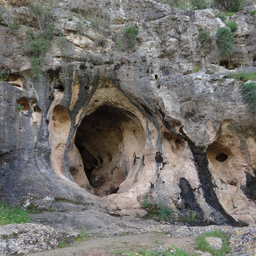
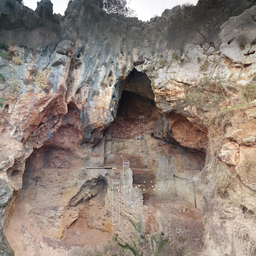
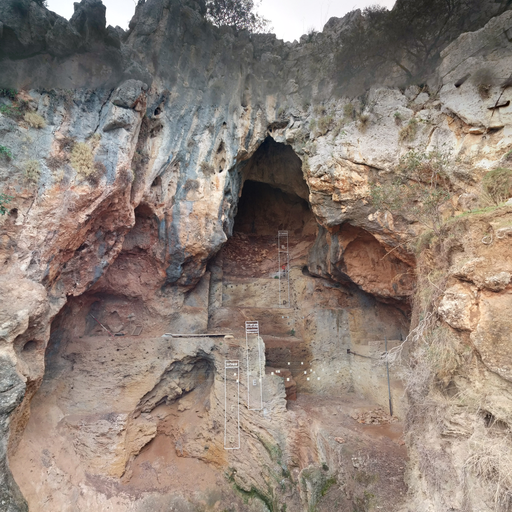
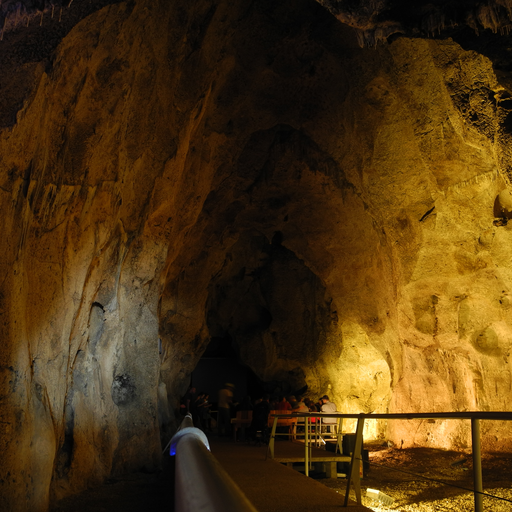
Historic cave in Israel's Carmel mountain range, part of a UNESCO World Heritage Site.
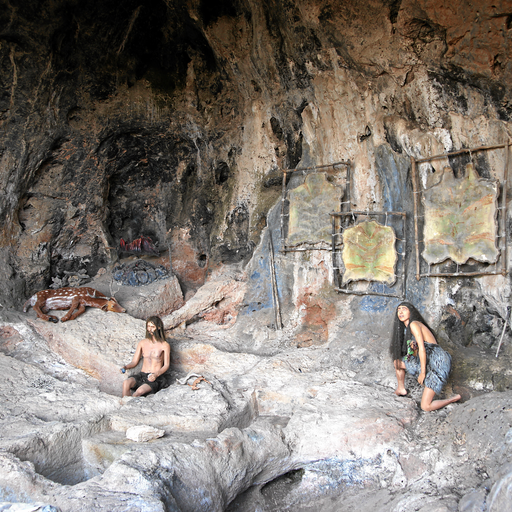
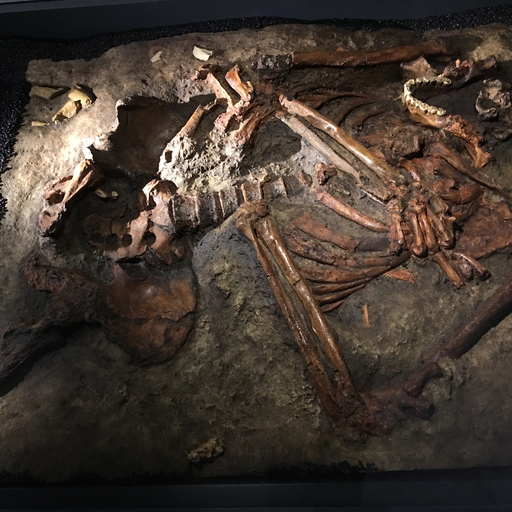
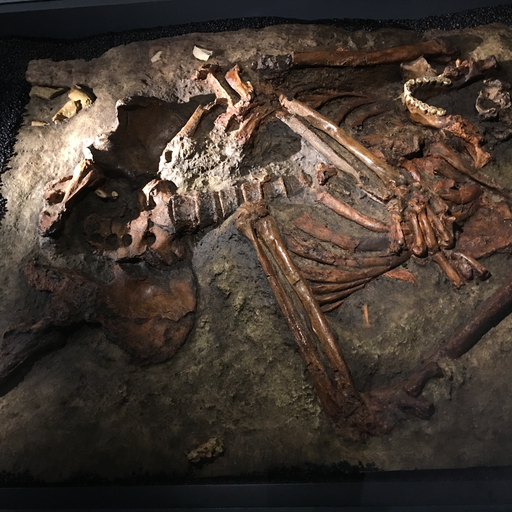
Skhul Cave in Mount Carmel, Israel, contains ancient human remains from 200,000 to 45,000 years ago. Excavations revealed nine burials of anatomically modern humans and Neanderthals, making it a key site for understanding early human evolution.
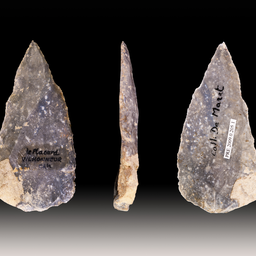
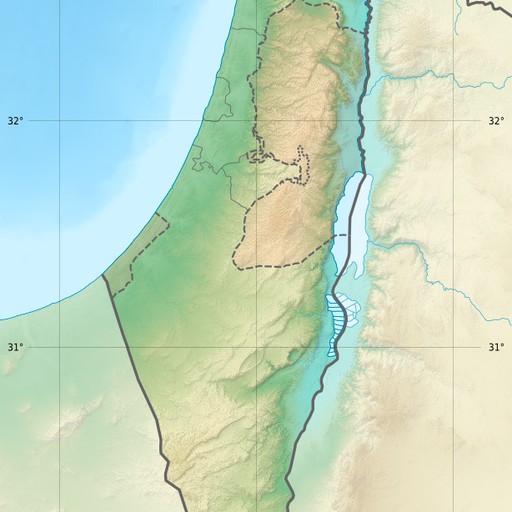
Skhul Cave, also known as Me'arat HaGedi, is a prehistoric archaeological site located in the Carmel mountain range in northern Israel, approximately 20 kilometers south of Haifa and 3 kilometers from the Mediterranean Sea. It is part of the Nahal Me'arot Nature Reserve, a UNESCO World Heritage Site. The cave is significant for its archaeological and paleoanthropological findings, particularly the discovery of several human skeletons that belong to an ancient population of Homo sapiens. Excavations at Skhul Cave began in 1928, led by Dorothy Garrod, and continued in the early 1930s under Theodore D. McCown. The site revealed nine graves, known as Skhul I to IX, containing remains of anatomically modern humans. These findings are crucial for understanding human evolution, as they indicate the presence of both Neanderthals and modern humans in the region from 200,000 to 45,000 years ago. The remains were initially classified as Palaeoanthropus palestinensis, a descendant of Homo heidelbergensis. Recent studies suggest that some individuals may have been hybrids of Homo sapiens and Neanderthals. Skhul Cave provides valuable insights into the coexistence and interaction of different hominin species during the Middle Paleolithic era.