Historic cave tomb in Jerusalem, Israel, with vine decorations.
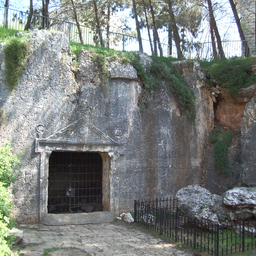
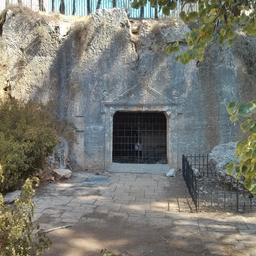
Historic cave tomb in Jerusalem, Israel, named for its vine and grape decorations. Discovered in 1897 and excavated by Vassilios M. Kardulias. Burial chamber constructed during the Second Temple period (circa 516 BCE - 70 CE). Continued use during Byzantine period (330-1204 CE). Located in garden between Ramot Eshkol and Sanhedria neighborhoods.
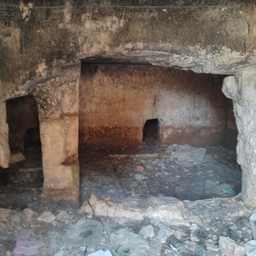
Tomb of the Grapes is a cave tomb located in Jerusalem, Israel, within the Ramot Eshkol neighborhood. Constructed during the Second Temple period (circa 516 BCE - 70 CE), it features intricate vine and grape decorations on its portico, giving it its name. The tomb consists of a spacious courtyard leading to a central burial chamber with three additional chambers branching off. One chamber includes an arcosolium, likely added near the end of use.
Discovered in 1897, the tomb was excavated by Vassilios M. Kardulias and later sealed between 1974 and 1976. Artifacts found inside include glass vessels, inscriptions, and stone sarcophagi, indicating continued use during the Byzantine period (330-1204 CE). The tomb is now part of a public garden known as "Max Warner" or "Gan Mishulam," featuring decorative elements and a portico with intricate carvings. Visitors can explore the site to learn about ancient burial practices and the history of Jerusalem during this period.