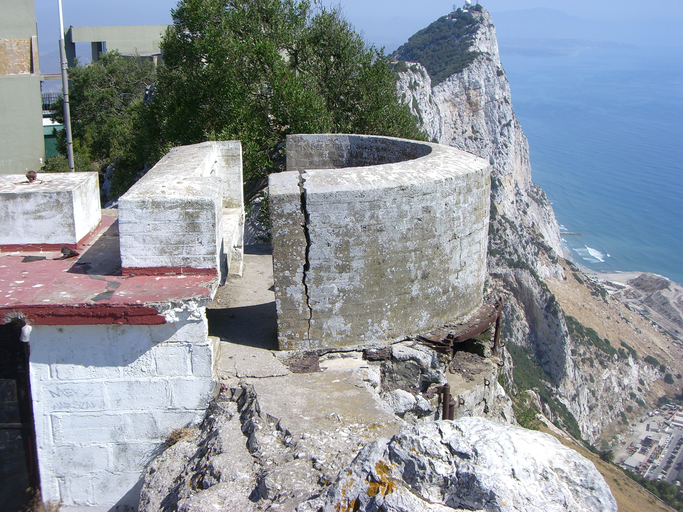
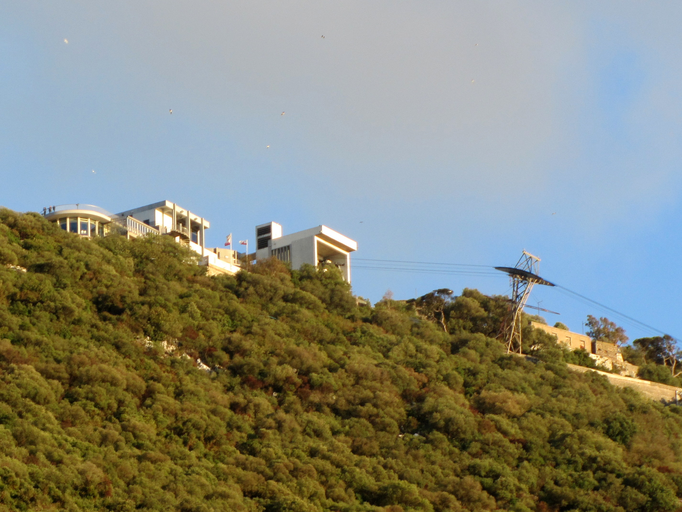
Ancient sand dune in Gibraltar’s Upper Rock Nature Reserve, once watercatchment.
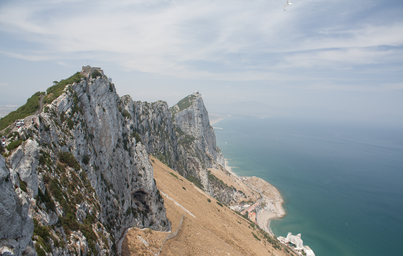
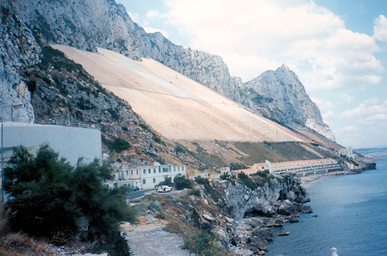
The Great Gibraltar Sand Dune is an ancient sand dune in the British Overseas Territory of Gibraltar. Forming part of the Upper Rock Nature Reserve, it dominates the Rock of Gibraltar’s eastern cliffs. It was formerly covered with corrugated iron sheets to collect rainwater, feeding underground tanks for the population’s potable water.
The Great Gibraltar Sand Dune is an ancient sand dune in the British Overseas Territory of Gibraltar. It forms part of the Upper Rock Nature Reserve and dominates the eastern cliffs of the Rock of Gibraltar. The dune is composed of yellow, windblown sand that lacks the red component found in sands on the Rock’s western side. It is made from the same sand that once formed part of a vast late Pleistocene savanna where Neanderthals hunted. Prehistoric levant winds blew sand from this savanna westwards, accumulating it against the eastern cliffs from the cliff base down to sea level. Occasional rockfalls from the precipice above added boulders, creating the consolidated formation seen today. Historically, the dune was modified by the British garrison, which scarped its upper limits to discourage desertion and prevent surprise attacks by Spanish troops. In the late nineteenth century, corrugated iron sheets were laid over the dune to collect rainwater. This water was channelled into underground reservoirs inside the Rock to help meet Gibraltar’s need for fresh drinking water. The dune also helped maintain sand supplies on Gibraltar’s eastern beaches, especially Sandy Bay, particularly when the sea removed material from the shore.