Historic cave in Israel's Carmel Mountains with Neanderthal remains.
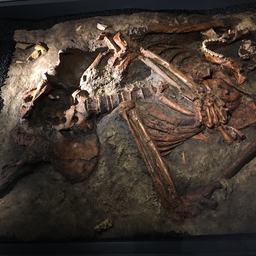
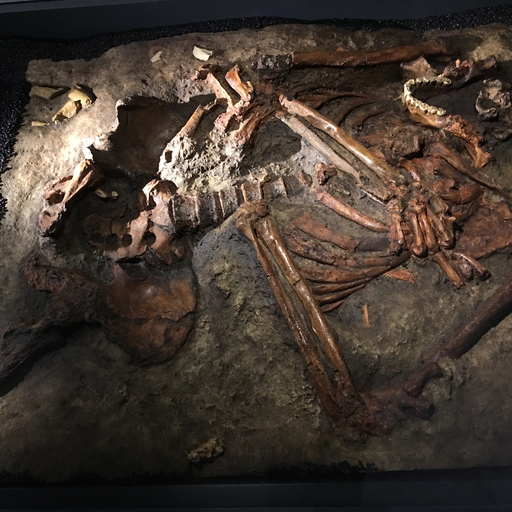
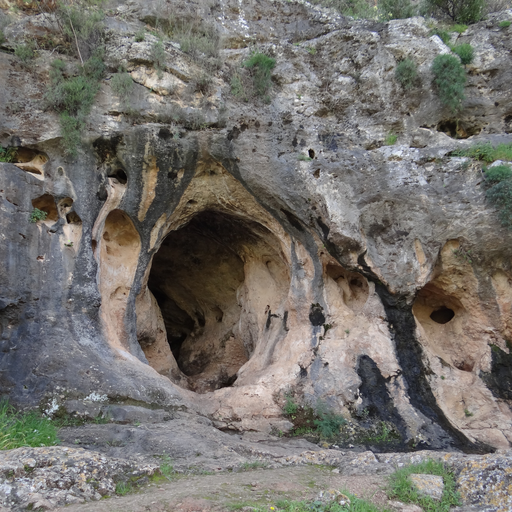
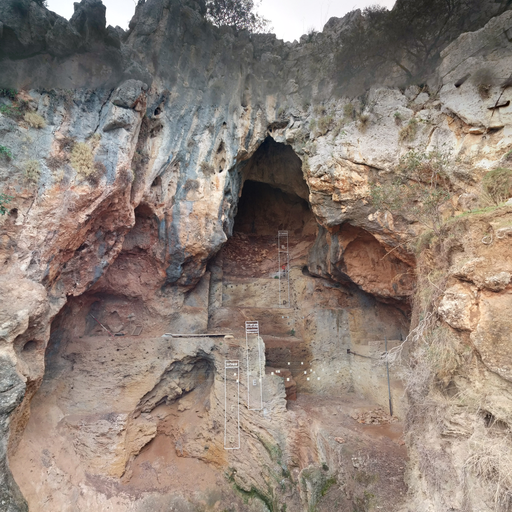
Kebara Cave is a limestone cave in Israel's Carmel Mountains, 10 km from Caesarea. Occupied 60,000-48,000 years ago, it yielded significant Middle Paleolithic artifacts and the nearly complete skeleton of a Neanderthal man named "Moshe," dated to around 60,000 years old.
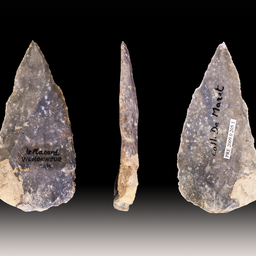
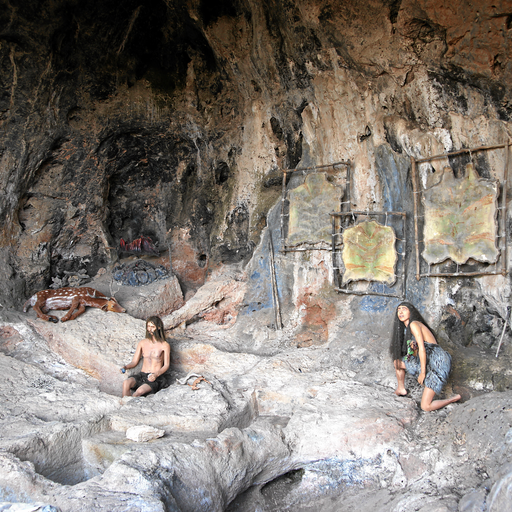
Kebara Cave is a significant archaeological site located in the Haifa District of Israel, near the town of Zikhron Ya'akov. Situated on the western slopes of Mount Carmel, the limestone cave is approximately 60 meters above sea level. It gained prominence due to its rich archaeological findings, particularly from the Middle Paleolithic period, dating back between 60,000 and 48,000 years ago. The cave is renowned for the discovery of Neanderthal remains, including a nearly complete skeleton known as "Moshe," found in 1982. This skeleton is one of the most complete Neanderthal specimens ever discovered, preserving much of the spine, ribs, and pelvis, although the skull and lower limbs are missing. Excavations in the cave began in the early 1930s, led by archaeologists such as Dorothy Garrod and Francis Turville-Petre, and continued through the 20th century with significant contributions from Ofer Bar-Yosef. The site has also revealed evidence of various prehistoric cultures, including the Kebaran and Natufian cultures, which succeeded the Mousterian culture associated with the Neanderthals. Artifacts found include tools made from flint and bone, as well as evidence of early human burial practices and dietary habits, providing valuable insights into prehistoric life in the region.