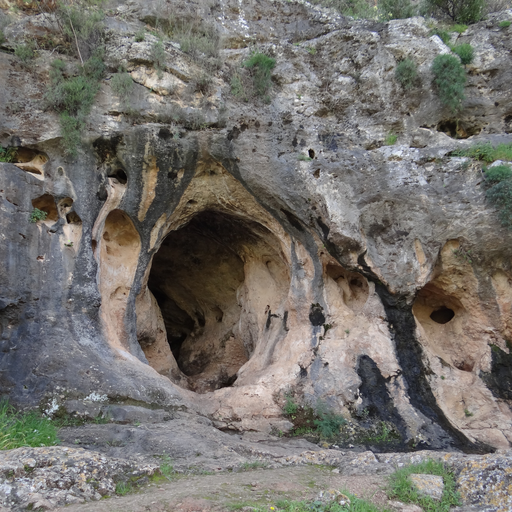
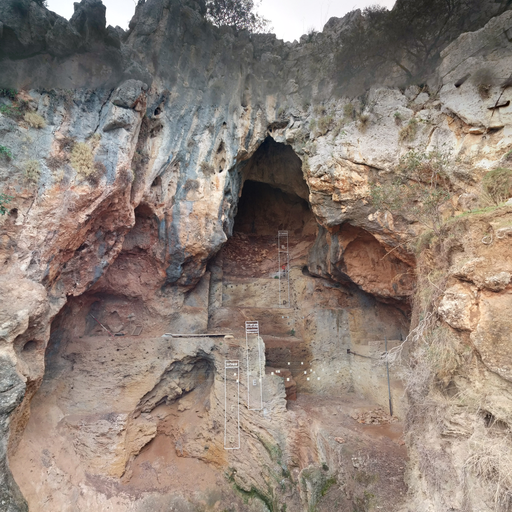
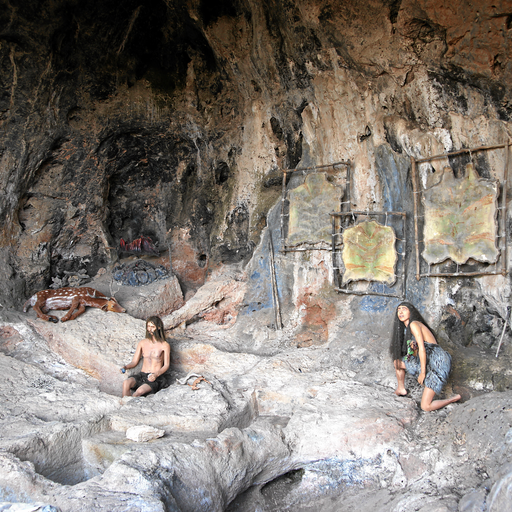
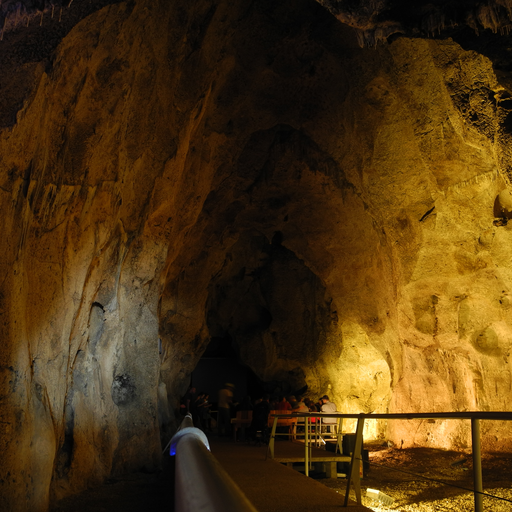
Historic cave in Israel's Carmel region, famous for Neanderthal remains.
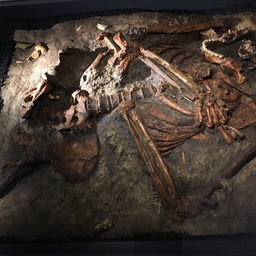
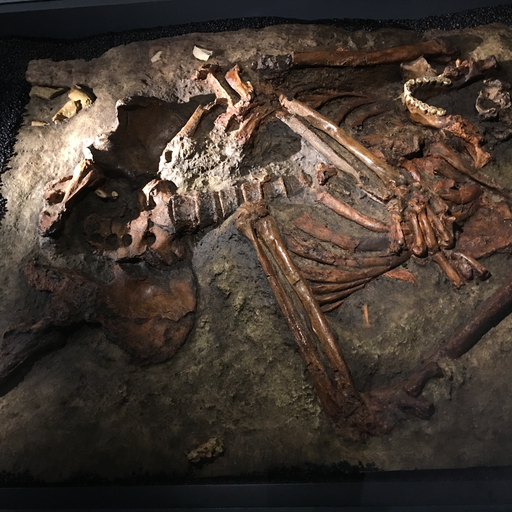
Historic cave in Israel's Carmel mountain range, famous for Neanderthal remains found there. The cave was inhabited between 60,000 and 48,000 years ago and is known for its archaeological discoveries, including a nearly complete Neanderthal skeleton named "Moshe".
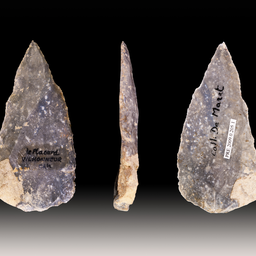
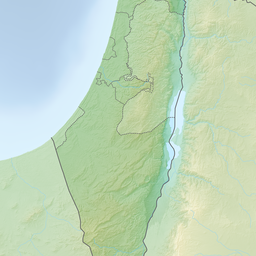
Kebara Cave is a limestone cave in Wadi Kebara, Israel, near the city of Zikhron Yaakov. Located on Mount Carmel's western slope at 60 meters above sea level, it was inhabited from around 60,000 to 48,000 years ago during the Middle Paleolithic era. The cave is famous for yielding significant archaeological and paleoanthropological finds, including nearly complete Neanderthal remains. Excavations began in the early 1930s by Dorothy Garrod and Francis Turville-Petrie. Major discoveries were made between 1964 and 1982 under the direction of Ofer Bar-Yosef. The most notable find was a nearly complete Neanderthal skeleton, nicknamed "Moshe," dated to around 60,000 years ago. This specimen provided crucial anatomical insights into Homo neanderthalensis. Kebara Cave also contains evidence of Mousterian culture and Natufian burials. Artifacts include flint tools, animal bones, and plant remains, offering a detailed picture of Neanderthals' diet and lifestyle. The cave's stratigraphy reveals layers spanning the Middle Paleolithic to the Natufian period. Today, Kebara Cave is part of Ramat Hanadiv Nature Park and serves as an important site for understanding human evolution in the Levant.