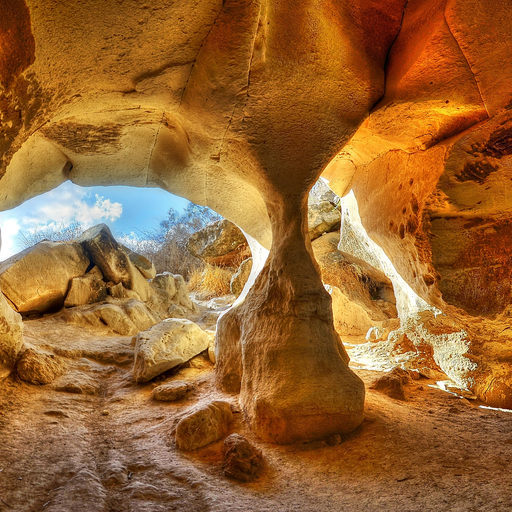
Ancient man-made caves in Jerusalem District, Israel.
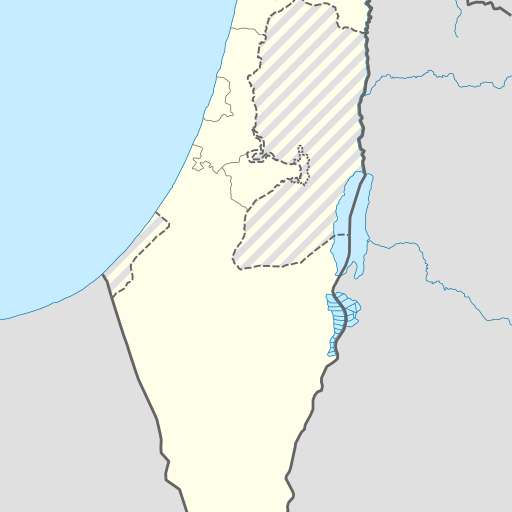
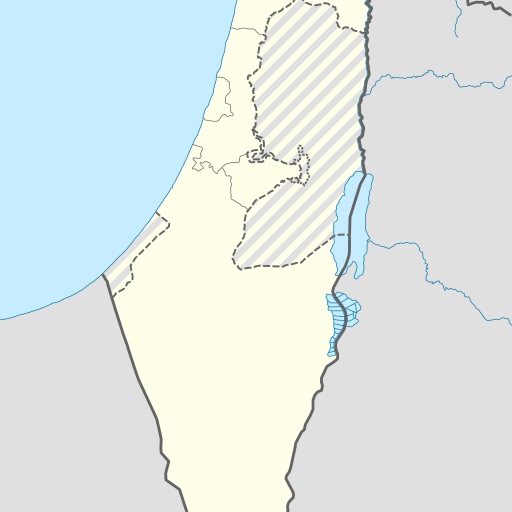
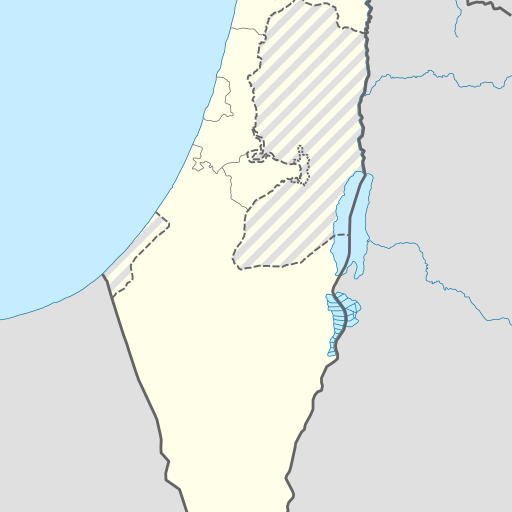
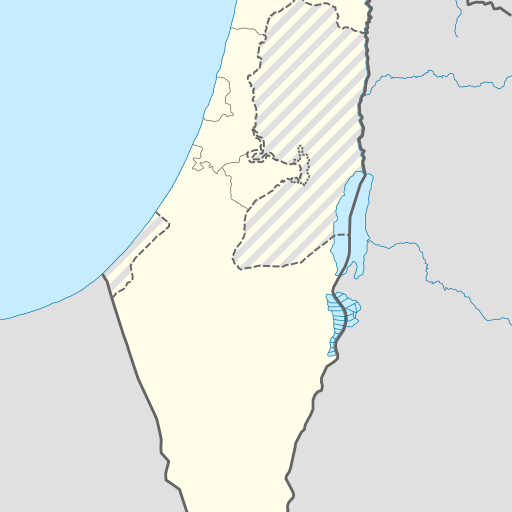
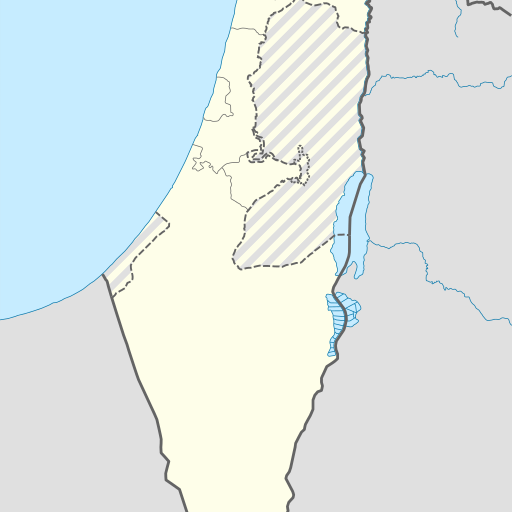
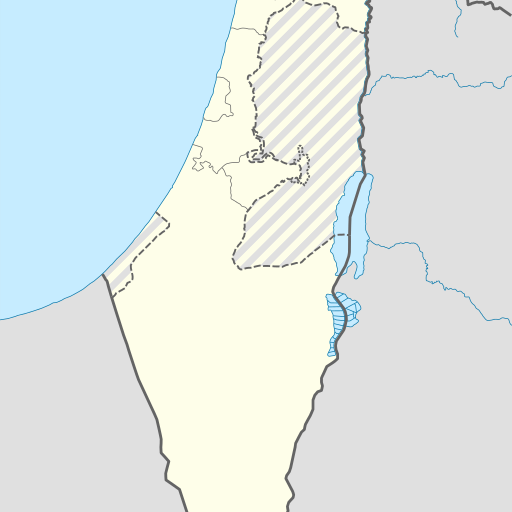
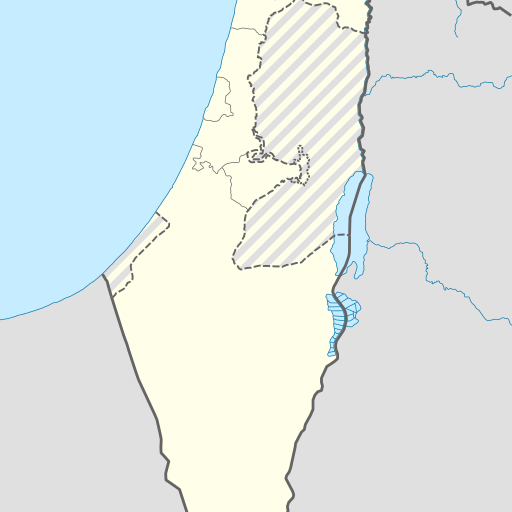
Me‘arot Pa‘amon is a cave complex in Jerusalem District, Israel. Located at 259 meters above sea level, it features bell-shaped openings carved into soft chalk rock. The area is densely populated and surrounded by agricultural land.
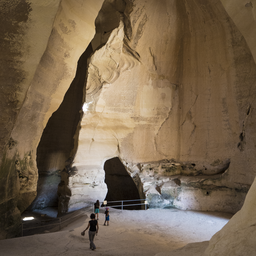
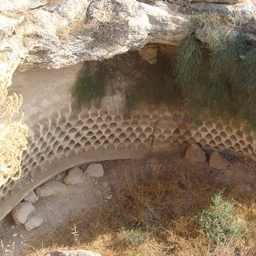
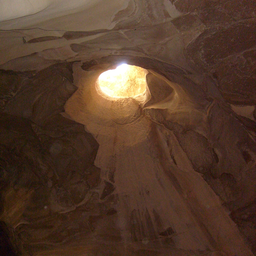
Me‘arot Pa‘amon, or Bell Caves, are ancient man-made quarries located in the Jerusalem District of Israel. These caves, named for their bell-like shape, consist of over 1600 individual cavities concentrated in clusters, with some containing up to 400 caves. The caves were carved into soft chalk rock called kurkar, which hardens upon exposure to air and water, forming a protective layer known as nari. The construction process involved creating small openings through the nari layer for access, then expanding the cavities within the softer underlying kurkar. This technique allowed workers to maintain humidity levels inside the caves, preventing the chalk from drying out and crumbling. The bell shape of the caves helped distribute weight evenly across the ceiling, providing structural stability. Caves were typically excavated to a depth of several meters but some extend up to 20 meters or more. Larger clusters often resulted from the merging of multiple smaller cavities, creating vast interconnected spaces with multiple entrances at the top. The quarries served various purposes over time. Smaller caves dating back to the Second Temple period were used for local construction needs. Larger quarries from Byzantine times onward supported industrial-scale stone extraction and export. Evidence includes carvings of crosses near cave openings and Arabic inscriptions in lower sections, suggesting peak activity during early Islamic rule. Today, Me‘arot Pa‘amon remains an important archaeological site offering insights into ancient quarrying techniques and regional history.