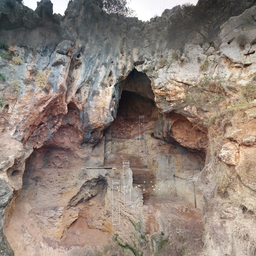
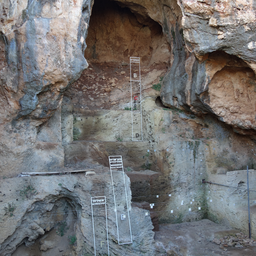
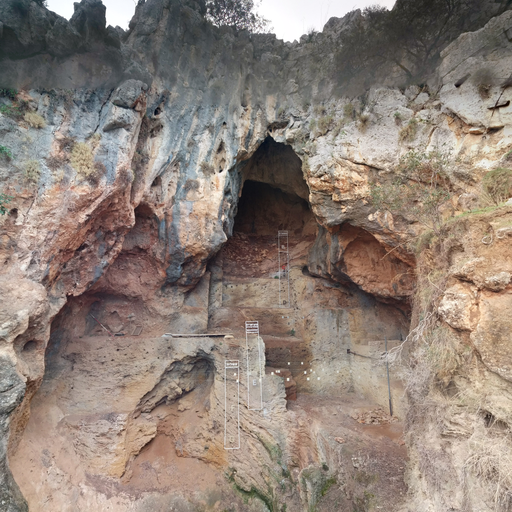
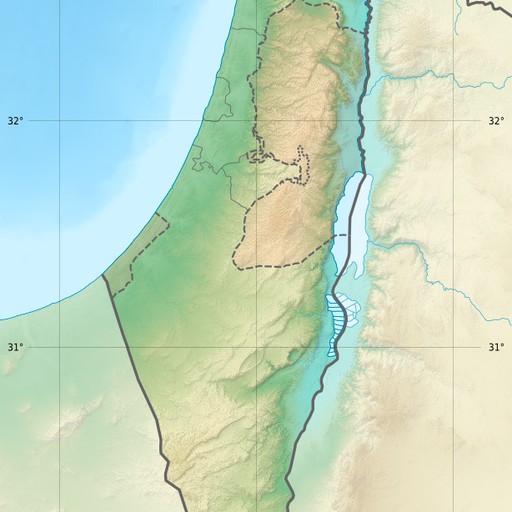
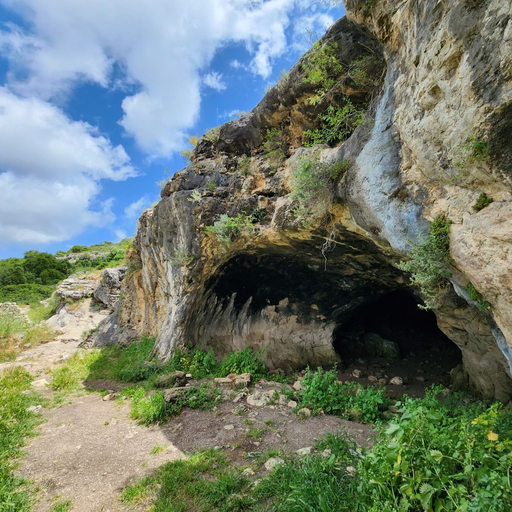
Historic cave in Israel's Carmel mountain range, part of Nahal Me’arot archaeological site.
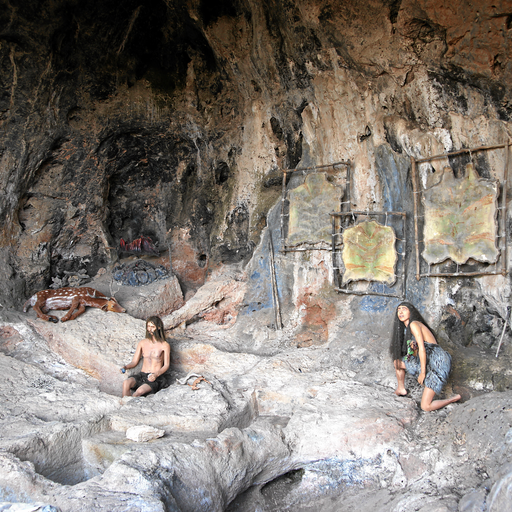
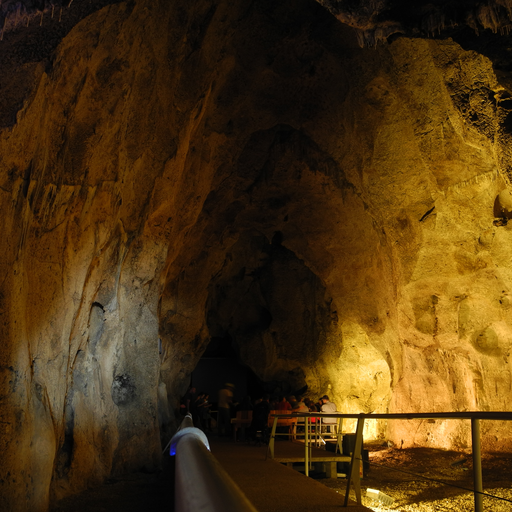
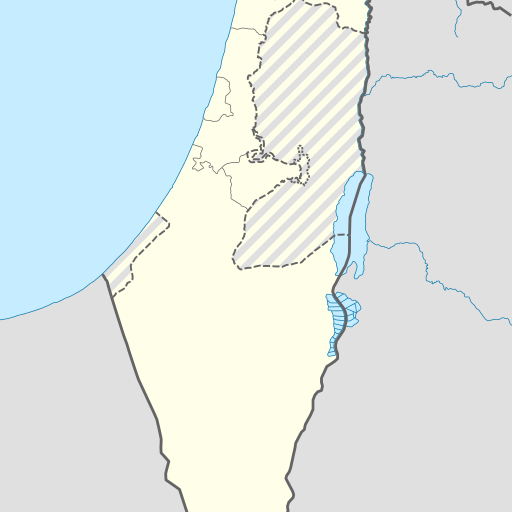
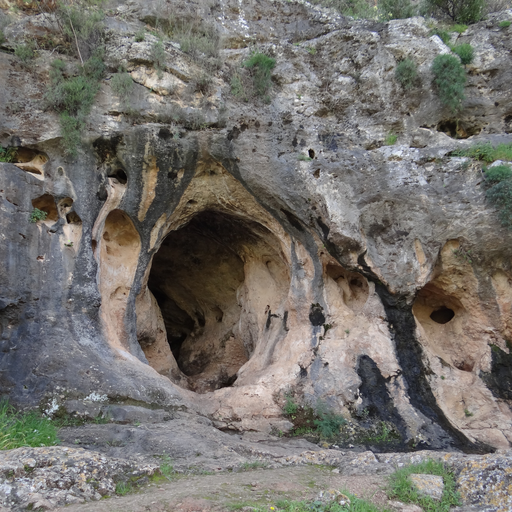
Tabun Cave in Mount Carmel, Israel, is part of the Nahal Me'arot Nature Reserve. Occupied from 500,000 to 40,000 years ago, it contains layers of archaeological deposits and Neanderthal remains, offering insights into human evolution and prehistoric cultures.
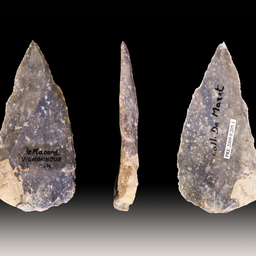
Tabun Cave is a significant archaeological site in the Nahal Me'arot Nature Reserve on Mount Carmel, Israel. Occupied intermittently from the Lower Paleolithic to Middle Paleolithic periods (500,000-40,000 years ago), it contains one of the longest stratigraphic sequences in the Levant, with up to 25 meters of sediment deposits. The cave's lowest layers contain large amounts of marine sand and pollen, indicating a warm climate when sea levels were higher due to glacial melting. Higher layers consist mainly of clay and silt, suggesting cooler, wetter conditions as glaciers formed again. Excavations uncovered numerous stone tools including handaxes and scrapers, reflecting technological advancements over time. The site also yielded Neanderthal remains dating back 120,000 years, among the oldest human fossils in Israel. Notable finds include a nearly complete female skeleton and an adult male jawbone with a chin protuberance unusual for Neanderthals. Artifacts from the Upper Paleolithic period indicate regular use of fire around 350,000 years ago. The cave's unique stratigraphy provides crucial insights into human evolution and adaptation in this region over hundreds of thousands of years.